
Bulgaria's Historic Eurovision Win at 70th Contest
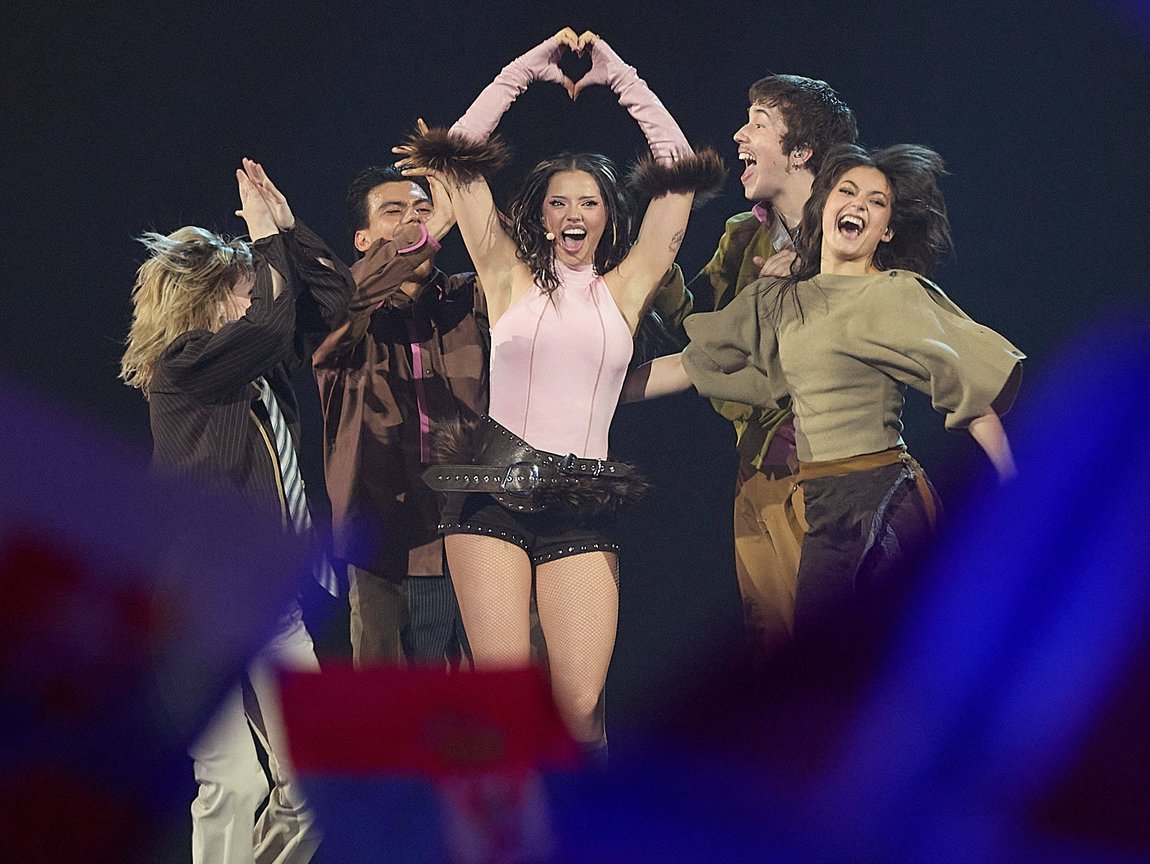
A Spectacular Night at the Eurovision Song Contest
The 70th Eurovision Song Contest, held in Vienna, Austria, was a night of high energy, creative stage designs, and unforgettable performances. The event on Saturday evening (May 16) featured an array of dazzling elements, including fire effects, black leather aesthetics, and a vibrant atmosphere that captivated even those who were initially skeptical.
The final was hosted by Victoria Swarovski, known for her role on "Let's Dance," and Austrian actor Michael Ostrowski. Thorsten Schorn provided commentary on Das Erste. The competition's outcome was determined by a 50-50 split between viewer votes and international jury scores.
The race for the top spot was intense, with Bulgaria and Israel appearing to be neck-and-neck for much of the night. However, Bulgaria ultimately emerged victorious with 516 points, followed by Israel with 343 and Romania with 296. Australia took fourth place with 287 points, and Italy placed fifth with 281. The juries had also predicted Bulgaria as the leader, with Australia and Denmark close behind.
Bulgaria Makes a Strong Return
Bulgaria's return to the contest after three years of absence was nothing short of spectacular. The country secured its first-ever Eurovision victory with Dara's performance of "Bangaranga." The song, described by Dara as capturing the feeling of being able to be anything, is a danceable track that features a highly creative and captivating choreography.
Germany's Disappointing Performance
For Germany, the evening was a sobering experience. Sarah Engels performed "Fire" with technical precision, featuring a dramatic backward fall into the arms of her dancers. Despite this, the audience gave her zero points. From the international juries, she received at least twelve points, but Germany ended up in 23rd place out of 25, finishing just ahead of the United Kingdom and host country Austria.
Memorable Performances from Other Countries
Denmark's Søren Torpegaard Lund delivered a memorable performance with "Før Vi Går Hjem," featuring a mesh shirt, leather shorts, and a plexiglass cage filled with dancers. Australia's Delta Goodrem wowed the audience with "Eclipse," performing under a giant crescent moon while being lifted five meters into the air on a platform extending from a grand piano.
Ukraine's Leléka provided an emotional counterpoint to the spectacle with "Ridnym," relying solely on her voice, curtains, and a wind machine. France's Monroe, at just 17 years old, impressed with her powerful performance of "Regarde!".
Tradition Meets Creativity
Croatia's Lelek delivered one of the most memorable moments of the night with their ethno-pop song "Andromeda," featuring polyphonic singing and symbolic face tattoos. The performance earned them 15th place.
Israel's Noam Bettan performed a heartfelt song for "Michelle" in front of a giant mirror diamond, though the audience's reaction was mixed, with audible boos during the voting.
Look Mum No Computer from the United Kingdom brought "Eins Zwei Drei" to the stage, featuring dancing computers, but it failed to resonate with the audience, resulting in last place. Greece's Akylas created a unique "WTF" moment with a cat hat, neon boots, a grandma, a gold man, a statue, and a scooter. Serbia managed to create a catchy pop song despite incorporating progressive metal, scream attacks, and a burning sword microphone.
Technical Challenges and Unique Performances
The Czech Republic's Daniel Zizka performed "Crossroads" with understated elegance, barefoot and in a wrinkled shirt. However, technical issues during his performance led to calls for a repeat on social media, though his voice remained unaffected.
Austria's Cosmó closed the competition with "Tanzschein," bringing TikTok dance routines to the stage. This marked a stark contrast to the previous year's winner, countertenor JJ, and he finished in second-to-last place.

Post a Comment for "Bulgaria's Historic Eurovision Win at 70th Contest"
Post a Comment