
Why Dustin Hoffman Passed on a Scorsese Masterpiece
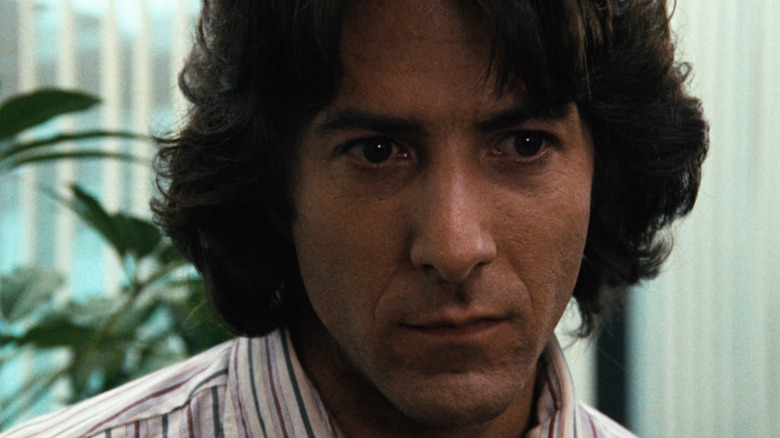
The Rise of Dustin Hoffman in the 1970s
In the mid-1970s, Dustin Hoffman was already a household name in Hollywood. His breakthrough came in 1967 with Mike Nichols' dramedy "The Graduate," which became a cultural phenomenon. Adjusted for inflation, this film made more money at the North American box office than modern blockbusters like "The Dark Knight," "The Avengers," and "Jurassic World." This moody coming-of-age story about a young man seduced by an older woman proved that even a seemingly niche film could achieve massive commercial success.
"The Graduate" also earned critical acclaim, receiving seven Academy Award nominations, with Hoffman himself nominated for Best Actor. Two years later, he appeared in the Best Picture winner "Midnight Cowboy," which earned him another Oscar nomination. Then, in 1974, he was nominated for Best Actor again for his role in Bob Fosse's biographical drama "Lenny." It was clear that Hoffman was not only a big deal but also in high demand during this time.
A Missed Opportunity with Martin Scorsese
During this period, Hoffman was approached by a rising director named Martin Scorsese. Between 1967 and 1974, Scorsese had directed four films, establishing himself as a filmmaker to watch. His 1973 film "Mean Streets" received widespread critical praise, and his 1974 drama "Alice Doesn't Live Here Anymore" was nominated for three Oscars, with Ellen Burstyn winning for her lead performance. Given their mutual status in Hollywood, it seemed natural that Scorsese and Hoffman would collaborate on something.
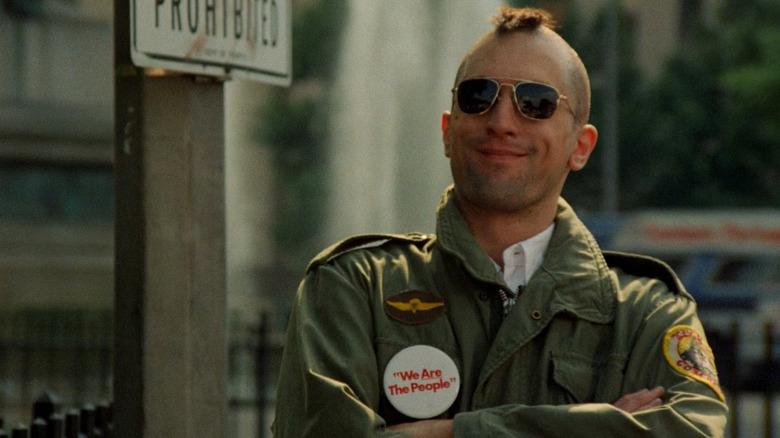
Scorsese tried to get Hoffman to play the lead role of Travis Bickle in his upcoming 1976 film "Taxi Driver." However, Hoffman wasn't familiar with Scorsese's work at the time and was confused by the lack of a script when the director pitched the project. As a result, he turned down the offer.
Hoffman's Reflections on the Missed Role
Years later, Hoffman recounted the experience on "Late Show with David Letterman":
"Honest, this guy came up to see me. [...] He was a little guy. He said his name was Marty Scorsese, and he started talking to me about ['Taxi Driver']. I didn't know what he was talking about. There was no script. He was going on and on and on and on, talking a mile a minute. After he left, I said, 'Who is that guy?' And I think he may have been asking me for it because he was trying to raise the money for it."
Hoffman missed out on "Taxi Driver," but it wasn't necessarily a bad decision. In 1976, he starred opposite Robert Redford in the Best Picture Oscar-nominated "All the President's Men" and appeared alongside Laurence Olivier in the acclaimed thriller "Marathon Man." If one is going to miss out on "Taxi Driver," working on these films was certainly a worthwhile alternative.
The Legacy of "Taxi Driver"
While Hoffman didn't take the role, "Taxi Driver" went on to become a classic, with Robert De Niro delivering a legendary performance as Travis Bickle. Although Hoffman isn't known for playing heavy or menacing characters like De Niro, a version of Bickle with Hoffman's nervous, twitchy energy could have been just as terrifying. Scorsese ultimately made the right choice, but Hoffman's absence from the film doesn't detract from his impressive career.
Hoffman continued to thrive, starring in a mix of director-driven films and commercial successes. He eventually won the Best Actor Oscar for 1979's "Kramer vs. Kramer," cementing his legacy as one of the greatest actors of his generation.

Post a Comment for "Why Dustin Hoffman Passed on a Scorsese Masterpiece"
Post a Comment