
Why B-21 Raider's New Base Costs $1 Billion Less
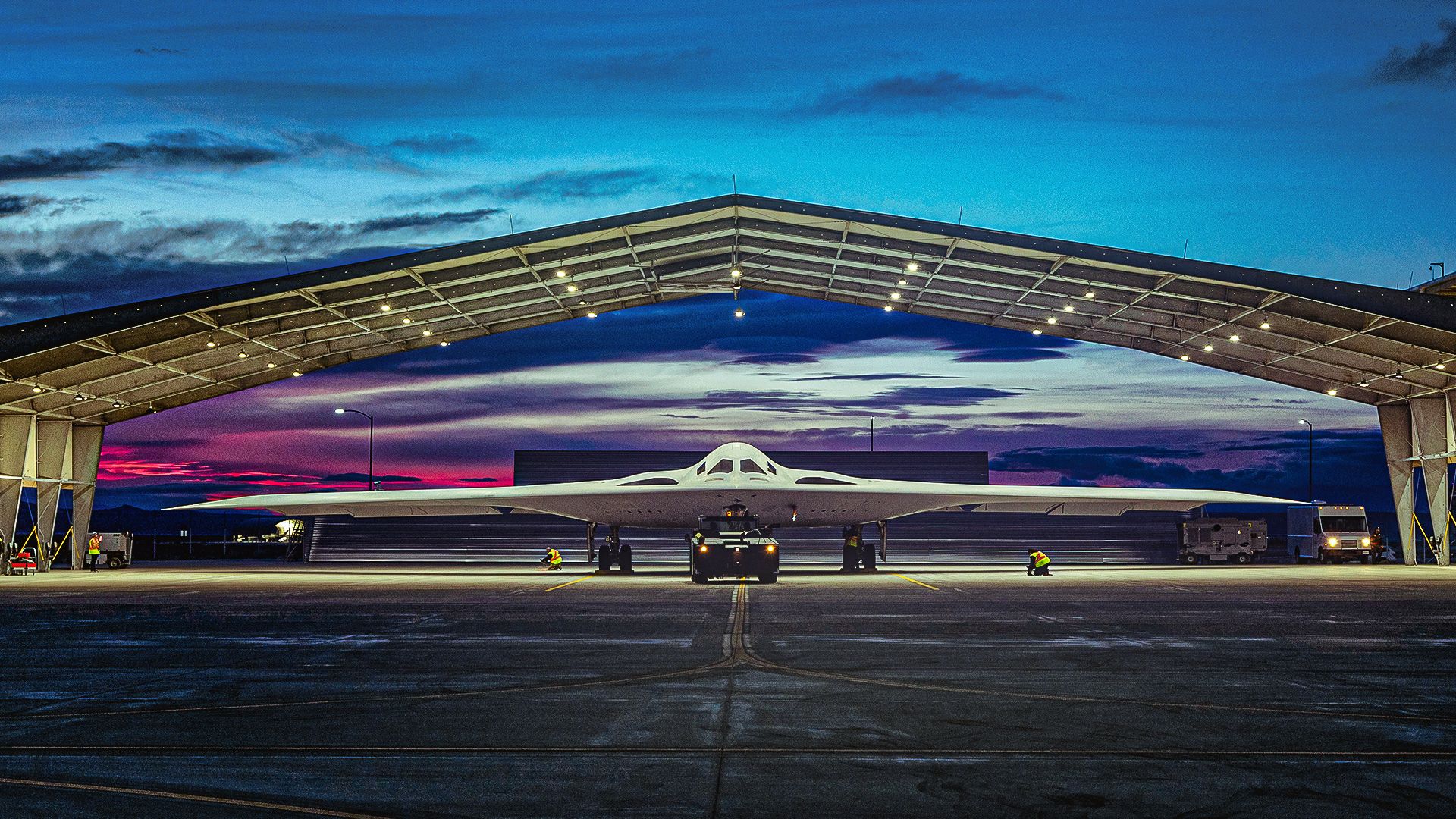
Upgrading Whiteman Air Force Base for the B-21 Raider
Upgrading Whiteman Air Force Base to support the new Northrop Grumman B-21 Raider is significantly more cost-effective than other locations, as it has been designated as the second official airfield for the aircraft. This is due to the base already possessing much of the specialized infrastructure needed for stealth bomber operations. In contrast, bases like Dyess AFB and Ellsworth AFB, which currently house the Rockwell B-1 Lancer, require extensive, decade-long rebuilds costing approximately $1.6 billion each. Whiteman’s upgrades are described as minor, involving only 16 new facilities compared to the over 24 major projects required at Dyess.
The B-21 Raider is designed to replace both the B-1 Lancer and the B-2 Spirit by the mid-2030s. The B-2 and B-21 have similar dimensions and infrastructure needs. Whiteman already has high-security maintenance complexes and climate-controlled hangars necessary for sensitive stealth coatings. By leveraging existing bomber infrastructure, the Air Force can maximize the reuse of facilities, reducing overhead and minimizing operational impact during the transition.
The Next Generation of Stealth Air Power
Although the B-2 is more modern than the B-1, it is the most maintenance-intensive and costly combat platform in the Air Force inventory. The B-21 is significantly more cost-effective, estimated at $700 million per unit compared to the B-2's inflation-adjusted $2 billion. This cost reduction is largely due to the B-21’s smaller size, modular design, and tougher stealth materials that do not require specialized climate-controlled hangars.
The B-21 will become the primary strategic strike platform for the entire US Air Force. While it is expected to be complemented by the upgraded Boeing B-52J Stratofortress in a new 'High-Low' fleet mix, the Raiders will replace the majority of current airframes and become the dominant platform. Unlike other bases that require massive top-to-bottom rebuilds, Whiteman requires only targeted upgrades.
In addition to the intensive classification and climate-controlled spaces, which are largely redundant now, Whiteman plays a crucial role in the deterrence mission. As a nuclear-capable base, it already has the high-security Weapons Generation Facilities and cleared personnel zones required for the Raider.
A Small Circle: Stealth Bomber Bases
The primary difference between Whiteman and other bases is that it is already a stealth-ready operational hub, while others serve strictly as temporary 'pit stops' or test sites. Whiteman has provided virtually 100% of the operational support for the B-2 Spirit fleet throughout its service life. Because the B-2 is the most maintenance-intensive aircraft in the US inventory, Whiteman remains its only permanent home.
Edwards AFB in California hosted the B-2 Combined Test Force, responsible for flight testing new engineering and software updates but does not maintain the operational fleet. Tinker AFB in Oklahoma manages depot-level maintenance, which involves massive, years-long overhauls on the B-2 that occur every few years for each airframe, but it does not support daily missions.
Bases like Andersen AFB in Guam and NSF Diego Garcia, an island in the Indian Ocean, have specialized shelters allowing B-2s to stay for weeks or months during missions. What they lack is the full-scale industrial support found at Whiteman. However, all this will change with the introduction of the new B-21, which is designed to require far less ground support for operations. Although Ellsworth and Dyess require significant investments for complex and long-term support, the Raider will have a much smaller footprint than its predecessor overall.
The Raider's Homefield: America's Heartland
One thing that will not change is the concentration of the new fleet in the Midwestern states for technological and operational security reasons. Keeping the most precious assets in the USAF inventory deep inside the continental United States has served as a physical barrier for many years. Because Whiteman is the only base with full B-2 support, nearly every major combat mission in the plane's history has started there.
Investment in the first three B-21 bases will continue the legacy of the B-2 and keep the new fleet of stealth bombers under Air Force Global Strike Command concentrated in the heartland. The Air Force has designated three primary bases to host the B-21 fleet. The first main operating base for the B-21 Raider is Ellsworth Air Force Base in South Dakota. Whiteman will be the second activated, and Dyess will follow as the third airfield.
Raider: Tailored For Agile Combat Employment
The Raider can deploy to hardened shelters and runways made for standard fighter jets during the Cold War, exponentially increasing its deployment options. It can operate from smaller, austere, or allied airfields that couldn't accommodate the massive B-2, making it far more flexible in regions like the Indo-Pacific. Not only does this make it more combat effective, but it also significantly reduces the ability of an adversary in a near-peer conflict to target the B-21 on the ground.
The B-2 fleet was essentially limited to its home field at Whiteman Air Force Base, occasional deployments to Andersen Air Force Base in Guam, and the Joint Base with the United Kingdom at Diego Garcia in the Indian Ocean, as well as to other locations like RAF Fairford. This extremely limited list of airfields where the fleet could be deployed made them predictable and easy to target for an enemy with similar capabilities as the US Armed Forces. It also made it easier for adversaries to reposition and avoid the fleet's reach by using space assets or other surveillance methods to observe USAF activity.
Dispersed basing of a B-21 larger fleet, expected to be about ten times the number of B-2s, will make the global reach of the AFGSC more resilient and loss-tolerant in a shooting conflict with an advanced opponent. Not only is it possible to be more unpredictable because the Raider can be accommodated by virtually any airfield in the US and its allied network, but the lower concentration of planes in one location at any given time also bolsters the fleet's survivability on the ground when it is most vulnerable.
Keeping Costs Down And Capabilities High In The B-21
The B-21’s smaller size and advanced engineering directly address the logistical hurdles that made the B-2 ill-suited for rapid, dispersed deployment. Unlike the B-2, which famously required massive climate-controlled hangars to preserve its delicate stealth skin, the B-21 uses more durable radar-absorbent materials that can be maintained under simple awnings in austere environments. It requires approximately 30% less ground support infrastructure and a smaller ground crew than the B-2. This reduced tail is crucial for the rapid, unpredictable dispersal of forces central to ACE.
Maintenance on the B-2 was notoriously labor-intensive, particularly for its delicate stealth coatings. The B-21’s smaller size and 'baked-in' resilient materials mean fewer surfaces to maintain, leading to lower operating costs and a higher mission-capable rate. The Raider's advancements lead to a projected mission-capable rate of over 80%, far exceeding the B-2’s historical 50-60%.
Although the actual numbers are classified, publicly released information reveals that the B-21 will be 10% to 20% smaller in wingspan. That is based on the Spirit being 172 feet (52.4 meters) wide, and the Raider expected to be between 132 feet (40.2 meters) and 150 feet (45.72 meters) wide. Similarly, it will have two engines, whereas the B-2 has four, and its overall payload is expected to be 25% to 30% lower. The B-2 can carry over 330,000 lb (149,685 kg), but the B-21 will haul 225,000 to 260,000 lb (102,058 to 117,934 kg).
Aside from being an extremely advanced Mission Command Center, all of the best data link technology in the world, lighter weight, and improved aerodynamics may grant the B-21 better aerial agility and energy management. Plus, the smaller airframe of the Raider allows it to deploy to bases that were not possible with the Spirit.
The B-2 Spirit was so expensive that production was cut from 132 to just 21 aircraft. This made every B-2 a national asset that was too valuable to risk. By being cheaper, at roughly $700 million per unit versus $2 billion for the B-2, the Air Force can field at least 100 aircraft. The larger fleet size creates redundancy and improves the sustainability of the industrial base behind it to support the fleet over its lifetime. A larger fleet also allows the US to maintain a persistent presence in multiple theaters simultaneously, rather than juggling a handful of airframes. Some senior leaders are pushing to raise the total order quantity to 145 planes.

Post a Comment for "Why B-21 Raider's New Base Costs $1 Billion Less"
Post a Comment