
Voters in Montgomery channel outrage into November victory
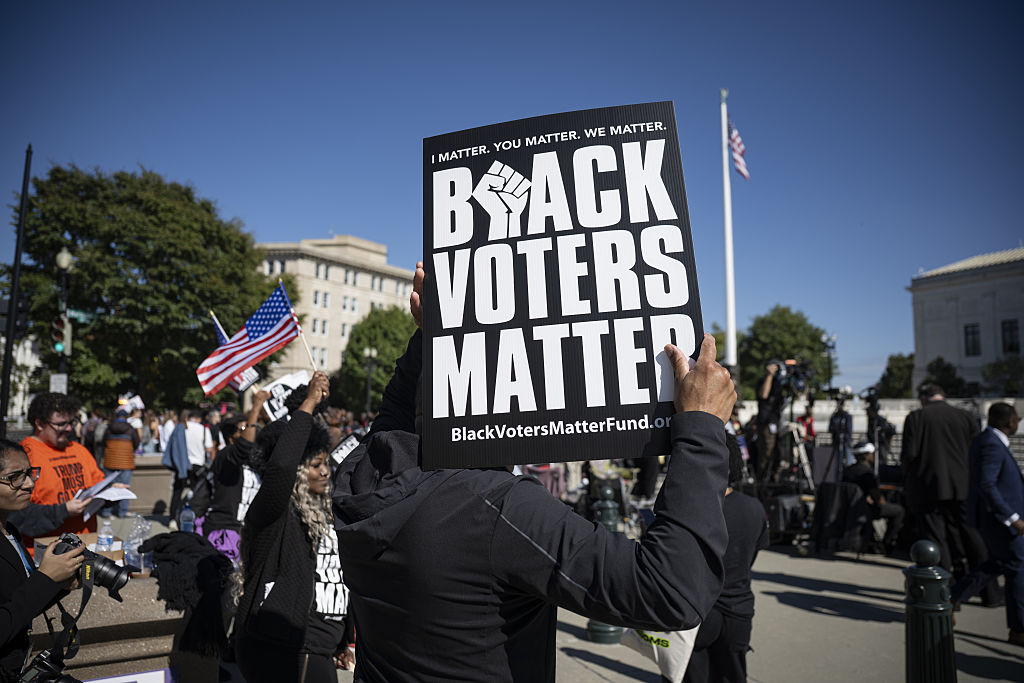
A Call to Action: Black Voters and Civil Rights Leaders Rally in Alabama
In the wake of a landmark Supreme Court decision that many view as a setback for voting rights, Black voters and civil rights leaders in Alabama are taking a stand. This weekend, they gathered for the All Roads Lead to the South National Day of Action, an event aimed at resisting the ruling and mobilizing for future political engagement.
The day began with a prayer service at Tabernacle Baptist Church in Selma, Alabama. Following the service, protestors and faith leaders embarked on a march across the Edmund Pettus Bridge—a symbolic location in the history of the civil rights movement. The procession concluded with a rally at the state capital building in Montgomery, where speakers from various organizations emphasized the importance of protecting voting rights.
Among the notable voices at the rally was Rev. Dr. Bernice A. King, daughter of Dr. Martin Luther King Jr., along with Derrick Johnson, president and CEO of the NAACP. Other participants included leaders from national civil rights, advocacy, and faith-based groups. Their message was clear: the fight for fair representation is far from over.
Resolute and Focused
The atmosphere at the rally was one of high energy and determination. Attendees were ready to transform their anger over the Supreme Court’s ruling into action at the polls during the upcoming midterm elections. Organizers stressed the need to ensure that conservative lawmakers cannot manipulate redistricting to dilute Black voting power.
One young participant, Asad Williams, who is 15 years old and not yet eligible to vote, made his presence felt at the event. He traveled from Huntsville, Alabama, with his father and younger brother to support the cause.
“I came out here to support my people and stop the prejudice in the law from people who are trying to redistrict our cities to weaken our votes,” Williams said. “I can’t really stand by and see our people get our power taken away from us. I want to stand with my people, and support them to represent our culture.”
Williams expressed that while he wasn’t surprised by the Supreme Court’s decision, he has been encouraging his family and friends to remain strong in the face of adversity.
“It’s been a recurrence in our history when they try to take the power from us. Black power is powerful, it’s beautiful, it’s what holds our country together,” he said. “It’s not fair, but I try to tell our friends and family that we always gotta support each other, hold ourselves above water, and be strong.”
A Growing Movement
Camille Anderson-Finley, a recent resident of Montgomery, echoed Williams’ sentiment. She explained that being in the heart of the civil rights movement made it impossible for her to stay away from the rally.
“I knew it was a necessity that I be here because of all that’s taking place,” she said. “That I now live in the home of the civil rights movement, to be so close and not attend just didn’t make sense. There’s too much at stake for me not to be here.”
Sylvia Swayne, a 28-year-old protestor from Birmingham, highlighted the importance of unity among different communities in the fight for voting rights. As a trans white woman, she emphasized that the struggle for Black voting rights is a shared cause.
“The Black vote is under attack, and if we aren’t all free, none of us are free. It’s important as a member of the trans community that we show up for Black voters and work together to move Alabama forward,” Swayne said. “This is a playbook that has been used before. We know what they try to do when they separate us to take away power. But I insist that young people step up and show up, vote on Tuesday, and be in solidarity. It’s now or never.”
A Nationwide Effort
The Alabama rally was just one part of a broader movement. The All Roads Lead To the South website features more than 50 associated events, with over 5,000 registrants and 600 people scheduled to gather in Montgomery. Over 275 partner organizations were involved in the effort.
The event drew direct parallels to the 1965 marches from Selma to Montgomery, which played a crucial role in the passage of the Voting Rights Act later that year. However, the Supreme Court’s recent decision in Louisiana v. Callais has effectively weakened the Act by striking down Louisiana’s addition of a second Black majority voting district as unconstitutional gerrymandering.
Experts warn that the court’s ruling, which disallows race as a consideration in drawing districts, could significantly reduce Black representation in Congress. The implications of this decision have sparked widespread concern among civil rights advocates, who are now working to ensure that these changes do not go unchallenged.

Post a Comment for "Voters in Montgomery channel outrage into November victory"
Post a Comment