
The Muslim Camel Driver Who Shaped America's 'Mother Road'
The Forgotten Contributions of Muslims in American History
Throughout U.S. history, there have been moments when the nation's relationship with Islam has been strained, particularly during times of conflict in the Middle East. In recent years, some politicians have made statements that reflect a deep-seated prejudice against Muslims, such as Tennessee Congressman Andrew Ogles claiming, “Muslims don’t belong in American society.” Similar sentiments have been echoed by other public figures, including Florida Rep. Randy Fine and the Georgetown University College Republicans. However, these views ignore the long and integral role that Muslims have played in shaping American society.
A Significant Presence in Early American History
One of the most overlooked aspects of American history is the presence of Muslims among the enslaved population. Up to 30% of enslaved individuals in the United States were Muslim, meaning they contributed to the construction of iconic American landmarks like the White House and the Capitol. These individuals also brought their agricultural expertise to regions such as the Carolinas, where they helped cultivate rice. Their contributions extended beyond labor; it is likely that many of them fought in key American wars, including the Revolutionary War, the War of 1812, and the Civil War.
The Role of Hadji Ali in the Development of U.S. Route 66
Perhaps one of the most surprising stories involves Hadji Ali, an Arab or Greek Muslim who became known in America as "Hi Jolly." His story is deeply intertwined with the development of U.S. Route 66, which celebrates its 100th anniversary this year. Ali was part of a U.S. Army initiative in the 1850s to use camels for transportation in the southwestern deserts. This project, known as the U.S. Camel Corps, was championed by then-Secretary of War Jefferson Davis and Robert E. Lee.
The plan involved bringing several dozen camel handlers, including Ali, from the Mediterranean region to Texas. The U.S. government spent $30,000 (equivalent to about $1 million today) to transport camels and cameleers. However, the mission faced numerous challenges, including a shortage of camels and difficulties in securing healthy animals. Despite these obstacles, Ali proved to be a skilled camel handler.
Overcoming Challenges and Shaping the Landscape
Upon his arrival in the U.S., Ali was given the name "Hi Jolly" due to the difficulty in pronouncing his original name. He quickly gained recognition for his expertise, especially after leading a successful expedition to chart a trade route from Texas to California. This journey, which took four months and covered 1,200 miles, included crossing the Colorado River—a task that required ingenuity and courage. Ali demonstrated that camels could swim, saving all of them from drowning while several horses and mules perished.
Despite the success of the expedition, the Camel Corps ultimately failed due to the outbreak of the Civil War. However, the route established by Ali and others eventually became part of U.S. Route 66, a highway that would become a symbol of American culture and travel.
Legacy and Recognition
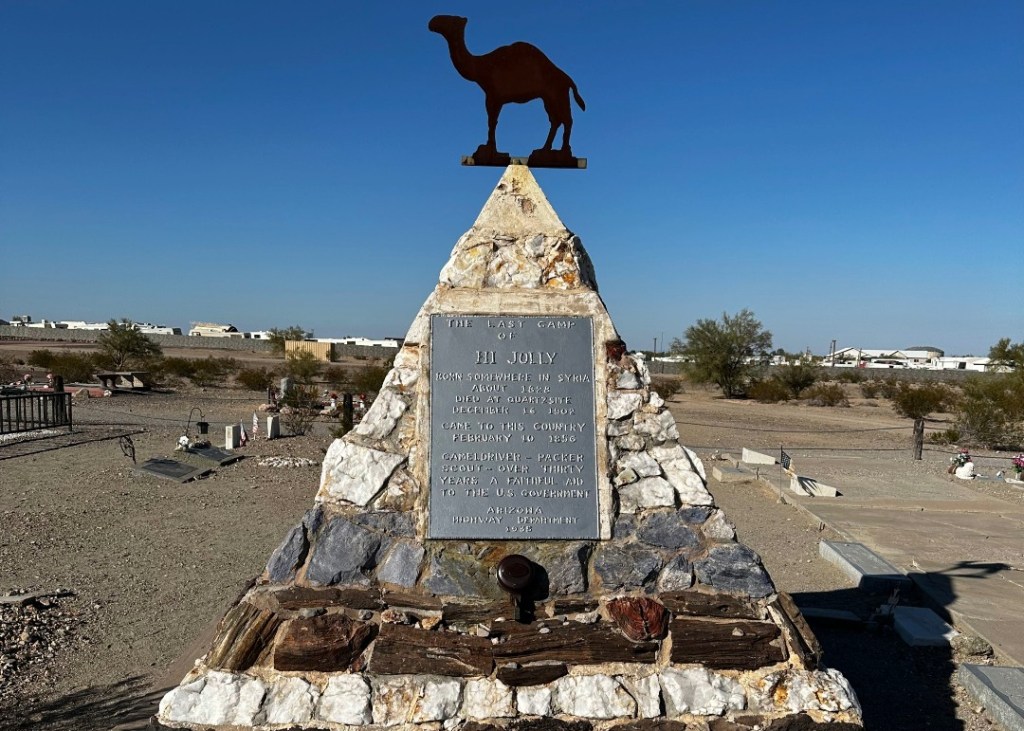
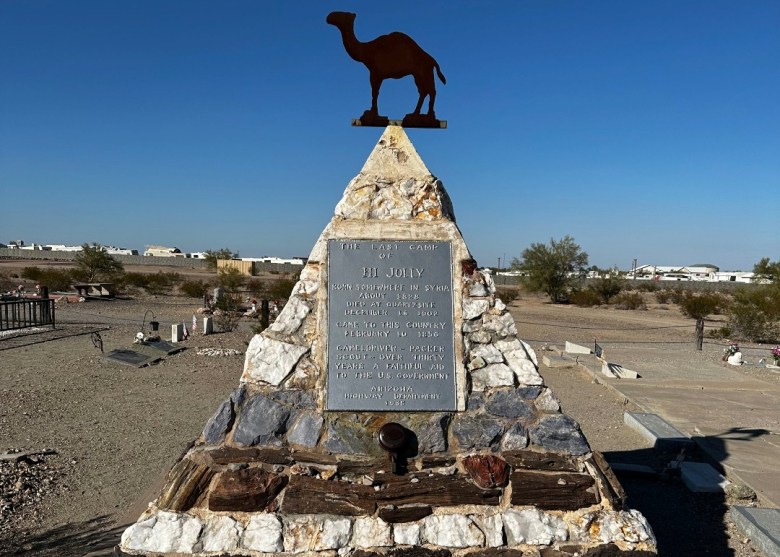
After the war, Ali struggled to find stability and support. He lived in Quartzsite, Arizona, where he became a local legend. His tomb, marked by an Egyptian-style pyramid, remains a popular tourist attraction. The town of Quartzsite honors his legacy with an annual event called Hi Jolly Daze, featuring parades, camel costumes, and traditional Arab garb.
Conclusion
Farooq Ahmed, the author of Kansastan and a writer currently working on a novel about Hadji Ali, highlights the importance of remembering these contributions. While some members of Congress may choose to overlook the role of Muslims in American history, communities like Quartzsite continue to celebrate their impact. Hadji Ali’s story is a testament to the resilience and contributions of Muslims in shaping the United States.

Post a Comment for "The Muslim Camel Driver Who Shaped America's 'Mother Road'"
Post a Comment