
The Bold Seizure of U-505 Shifted the Atlantic War
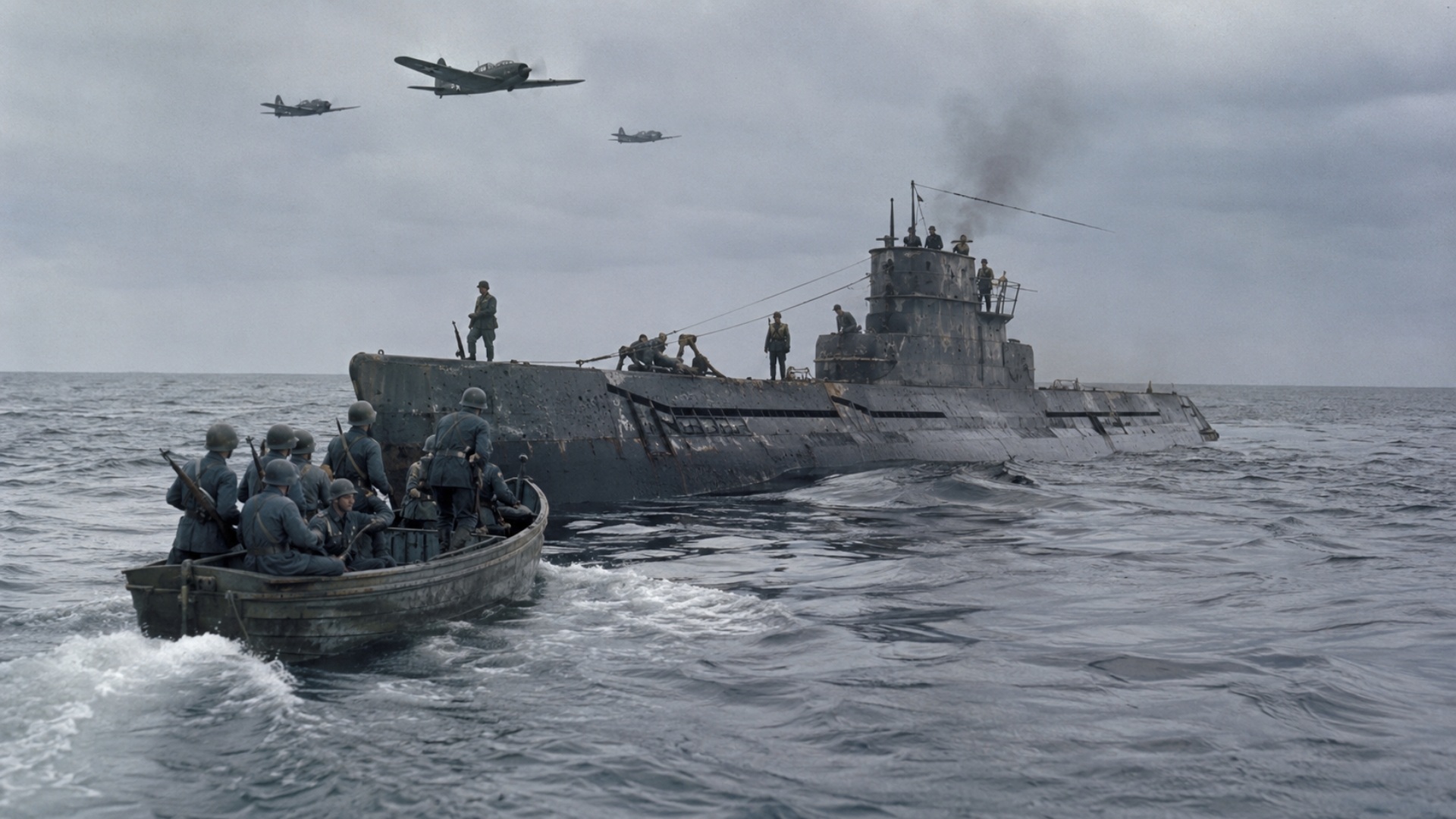
The Moment the Atlantic Gave Up a Secret
On June 4, 1944, two days before the Normandy landings, an American hunter-killer group in the Atlantic forced a German submarine to the surface off the coast of French West Africa. The U-boat was U-505, a Type IXC submarine that had been damaged by depth charges and aircraft from a task group built around the escort carrier USS Guadalcanal.
For most of the Battle of the Atlantic, the next step would have been simple: keep firing until the submarine sank. But Captain Daniel V. Gallery, commander of the task group, had prepared for something different. He wanted a German U-boat captured alive. Not merely sunk. Not merely photographed as it disappeared beneath the water. Captured, boarded, searched, and saved.
That was a radical idea in a war where submarines usually died fast or escaped. German crews were trained to scuttle their boats if capture seemed possible. Sea valves could be opened. Demolition charges could be set. Code books could be destroyed. A crippled submarine was not a helpless prize. It was a flooding steel trap.
Yet Gallery believed the risk was worth taking. Inside a German U-boat were the things Allied commanders wanted badly: cipher machines, code books, charts, orders, technical equipment, and clues to the submarine war still being fought across the Atlantic.
When U-505 surfaced, the opportunity Gallery had been waiting for finally appeared.
A Lesson Learned From a Missed Chance
Gallery’s determination had been shaped by an earlier encounter. On April 9, 1944, his task group helped sink U-515, commanded by Werner Henke, one of Germany’s noted U-boat commanders. U-515 had completed seven patrols and was credited with sinking 23 ships, along with other damaged vessels. In the final action, the submarine was forced to the surface and destroyed by aircraft and destroyer escorts, including USS Pillsbury. Sixteen of her crew were killed and 44 survived, including Henke.
To the Navy, the sinking was a success. A dangerous U-boat was gone. To Gallery, it also revealed a lost opportunity. U-515 had remained on the surface long enough to make him wonder whether it might have been boarded. If a submarine could be disabled rather than destroyed outright, perhaps its secrets could be taken before the sea swallowed them.
That thought changed how Gallery approached the next patrol. He quietly pushed his ships to prepare boarding parties. They would not simply hunt submarines. They would be ready to seize one.
The Navy Had to Relearn an Old Skill
The plan sounded almost antique. Boarding an enemy warship at sea belonged to another age, the age of sail, prize crews, and close combat between wooden ships. The U.S. Navy had not captured an enemy warship on the high seas since the War of 1812. Official Navy histories describe the capture of U-505 as the first such U.S. Navy capture since 1815. That meant there was no modern doctrine to follow.
The ships in Gallery’s group had to improvise. They studied what little intelligence they had on German submarines. They considered which valves might be opened, where demolition charges might be placed, where code materials might be stored, and how fast a boarding party would have to move once aboard.
USS Pillsbury, a destroyer escort in the task group, became central to the plan. Her boarding party was led by Lieutenant Junior Grade Albert L. David, a veteran sailor who had worked his way up through the Navy over decades. David was not chosen because he was theatrical. He was chosen because he understood machinery, flooding, damage control, and pressure under danger. Those skills were exactly what a captured submarine would demand.
Albert David Prepared for a Mission With No Manual
David and his men knew that the first minutes aboard a U-boat would decide everything. A German crew abandoning ship would almost certainly try to sink it. If sea valves were open, water would pour through the hull. If demolition charges were armed, the submarine could explode without warning. If enemy sailors remained aboard, the boarding party could be ambushed in narrow compartments where escape was nearly impossible.
The physical environment was just as dangerous. A damaged submarine might be dark, tilted, slippery with oil, filling with seawater, and still moving through the water. Its layout would be unfamiliar. Its labels would be in German. Its machinery could kill anyone who touched the wrong thing.
The boarding party trained for speed because hesitation would be fatal. They had to reach the submarine, climb aboard, enter through the conning tower hatch into the submarine’s dark interior, stop the flooding, disarm explosives, search for intelligence, and keep the boat afloat long enough for help to arrive. It was a mission built around a narrow window of time.
U-505 Was Forced to the Surface
By the morning of June 4, Gallery’s task group was preparing to end its patrol and head toward Casablanca. Then USS Chatelain detected a sonar contact. Aircraft from Guadalcanal helped mark the submarine’s position, and depth charges followed. The attack damaged U-505 badly enough that the submarine could no longer remain safely submerged. It came up in the Atlantic with its rudder jammed, circling on the surface and unable to maneuver properly. American aircraft and escorts fired to suppress the crew and keep them away from the guns without destroying the prize outright.
German sailors poured out of the submarine. Some jumped into the sea. Others were driven off the deck by gunfire. One German sailor was killed during the action, and the rest of the crew abandoned the boat. The submarine was still afloat, still moving, and still in danger of sinking. That was the moment the boarding party had trained for.
The Boarding Party Climbed Onto a Sinking Enemy Boat
David’s party from USS Pillsbury raced toward U-505 in a whaleboat. The submarine was not lying still like a captured ship in harbor. It was circling, damaged, slippery with seawater and oil, and possibly rigged to explode. David boarded first. His men followed him onto the deck and then down through the conning tower hatch into the submarine’s dark interior. Official accounts credit David with leading the boarding party that took control of U-505 after it had been forced to surface. He later received the Medal of Honor for his actions.
Inside, the danger was immediate. The submarine was flooding. Scuttling valves had been opened. Water was entering the hull. David’s men moved through unfamiliar compartments, closing valves and searching for demolition charges. They had to work quickly, often in poor light and under the constant fear that the boat might go under with them inside. Their actions stopped the scuttling. Against the odds, U-505 remained afloat.
From Enemy Weapon to Historical Witness
After the war, U-505 avoided the fate of most captured enemy weapons. Instead of being scrapped, it was preserved. Today, it is displayed at the Museum of Science and Industry in Chicago, one of the most famous surviving German U-boats of World War II. Its survival gives the story a rare physical presence. Many naval victories exist only in reports, coordinates, and wreck sites far below the ocean. U-505 can still be seen as steel, machinery, cramped compartments, and narrow passageways—the same spaces David and his men entered in darkness on June 4, 1944.
That is why the capture remains more than a dramatic episode. It shows how the Battle of the Atlantic was won not only by sinking submarines, but by learning from them. It shows the value of intelligence as much as firepower. It shows that a few minutes of decision, taken by men prepared for a mission with no modern precedent, could turn a deadly enemy vessel into a source of knowledge.
The Navy had been trained to destroy U-boats. On that morning, it captured one instead. And hidden inside U-505 was something more valuable than the submarine itself: the enemy’s secrets.

Post a Comment for "The Bold Seizure of U-505 Shifted the Atlantic War"
Post a Comment