
Tariffs Still Have Power
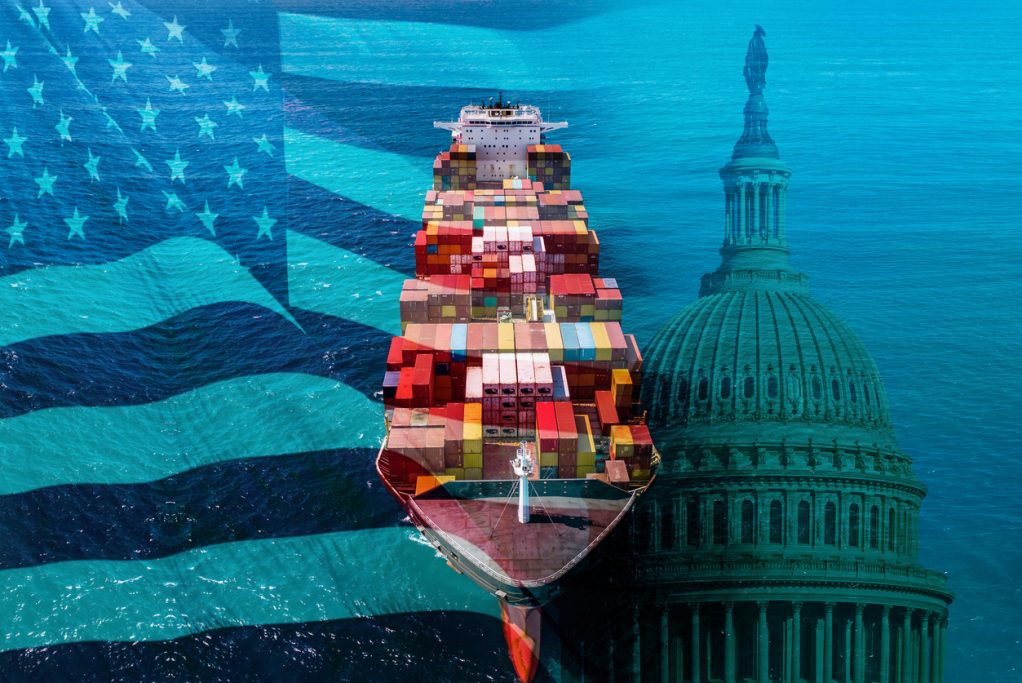
The Evolution of Conservative Economic Thought
For many years, the conservative approach to economic policy has centered around the idea that free trade is inherently beneficial. This belief has been treated more as a principle than a flexible strategy. In theory, free trade promotes efficiency, reduces prices, and fosters shared prosperity. However, in practice, the global trading system has never truly been free, and American workers have often borne the consequences of this illusion.
Tariffs remain a powerful tool for policymakers to advance key national interests. These include economic security, revenue generation, and negotiation leverage. When used wisely, tariffs are not an abandonment of market principles but rather a recognition that markets need to be shaped to serve the nation's broader goals.
A Flawed Assumption of Fair Trade
The traditional conservative argument for free trade relies on the assumption of a level playing field. Yet, this assumption does not hold up under scrutiny. Many of our trading partners impose high tariffs, manipulate currencies, subsidize their industries, and ignore intellectual property protections. At the same time, they benefit from relatively open access to U.S. markets.
This is not true free trade. Agreements like the North American Free Trade Agreement (NAFTA) were marketed as victories for the American economy, yet they contributed to the offshoring of critical industries and the decline of manufacturing communities across the country. The issue is not trade itself, but the way it has been negotiated.
Reforms such as the United States-Mexico-Canada Agreement (USMCA) have shown that trade agreements can be restructured to better protect American workers and industries. These changes demonstrate that the U.S. does not have to accept unfavorable terms based on outdated economic theories.
The Role of the State in the Economy
In today’s geopolitical climate, economic policy is closely tied to national security. The COVID-19 pandemic, supply chain disruptions, and rising global tensions have highlighted the dangers of overreliance on foreign production.
This is not about isolationism; it is about building resilience. An economy that cannot produce its own pharmaceuticals, semiconductors, or critical infrastructure components is vulnerable. Tariffs can help encourage the reshoring of these industries, strengthening domestic capabilities and reducing dependence on adversarial nations.
By promoting domestic production and protecting key sectors from unfair competition, tariffs contribute to rebuilding the industrial base that supports both economic strength and national defense.
The Financial Benefits of Tariffs
Critics often overlook a simple fact: tariffs generate government revenue. This is especially important during times of increasing fiscal pressure. Unlike income taxes, which directly affect American workers and businesses, tariffs are typically paid by foreign producers seeking access to U.S. markets, often through reduced profit margins.
While some costs may be passed on to consumers, tariffs can still serve as a meaningful source of federal revenue. This revenue can be used to reduce deficits, fund tax relief, or invest in infrastructure and strategic industries. In this sense, tariffs are not just protective—they are productive.
Strategic Leverage in International Negotiations
Perhaps most importantly, tariffs provide leverage in international negotiations. Access to the American market is one of the most valuable assets in the world and should be treated as such. When the U.S. imposes tariffs in response to unfair practices, it signals that reciprocity matters.
This forces trading partners to engage in serious negotiations. We have already seen how the credible threat—or use—of tariffs can lead countries to negotiate on trade barriers, regulatory practices, and even broader issues tied to economic and national security.
A New Approach to Trade Policy
For too long, trade policy has focused on abstract economic gains at the expense of the lived experiences of American workers. Lower consumer prices mean little to communities that have lost their industries, jobs, and economic stability.
A smarter trade policy recognizes that growth must be broadly shared. It acknowledges that the dignity of work, the strength of communities, and the resilience of the middle class are central to national prosperity.
Tariffs, when used carefully, help restore this balance. They send a clear message: access to the American market is a privilege, not a right, and it must be earned through fair and reciprocal treatment.
Updating Conservative Principles
Supporting tariffs does not mean abandoning conservative principles. It means adapting them to reflect current realities. Markets function best when rules are enforced and competition is fair. When these conditions do not exist, as is often the case in global trade, policy must evolve.
Tariffs are not a relic of the past. They are a practical, strategic tool for advancing American interests in a complex and competitive world. The goal is not protectionism for its own sake, but a stronger, more secure, and more prosperous United States.
It is time to move beyond outdated assumptions and recognize a simple truth: tariffs aren’t dead—they’re necessary.

Post a Comment for "Tariffs Still Have Power"
Post a Comment