
Students at Cal Poly protest controversial surveillance cameras
Protests Against Surveillance Cameras at Cal Poly
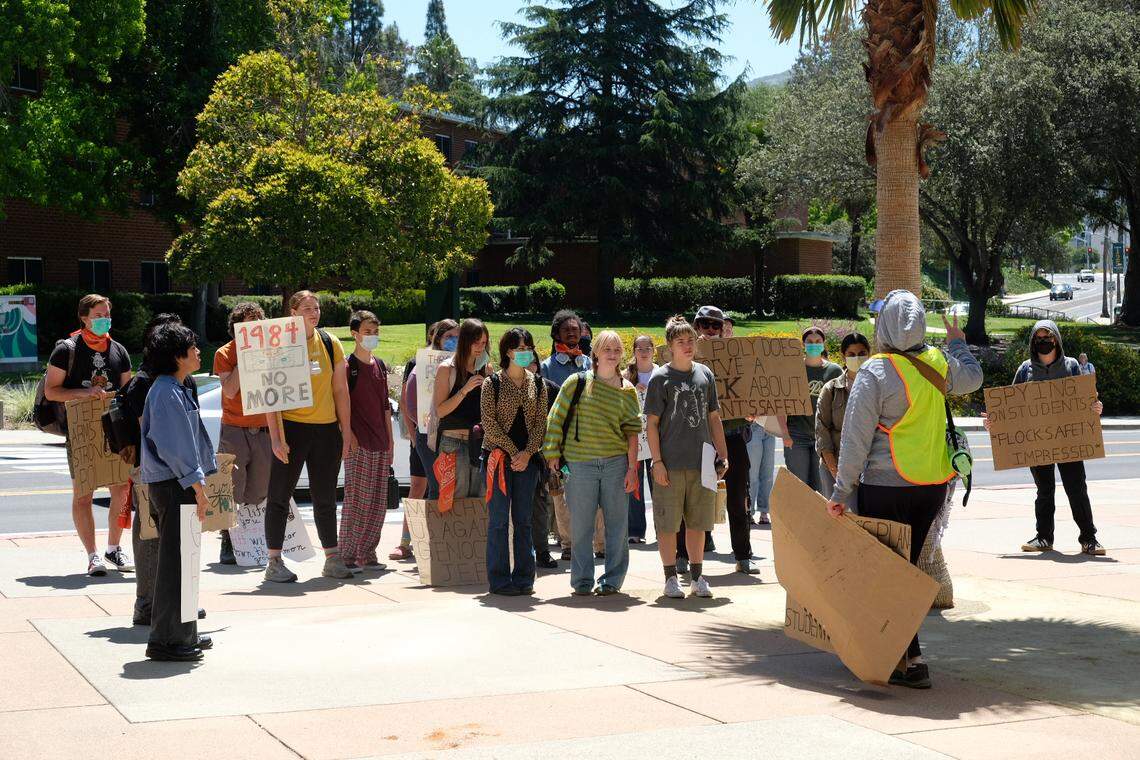
A group of Cal Poly students and community members marched through campus on Friday as part of an ongoing effort to remove controversial surveillance cameras from university grounds. The protest focused on the use of Flock Safety cameras, which have sparked concerns about privacy and potential misuse.
Cal Poly currently has a contract with Flock Safety, a company that operates surveillance systems in communities across the United States. According to university spokesperson Matt Lazier, the university operates 17 Flock cameras: ten automatic license plate readers (ALPRs) and seven live cameras. These devices are designed to collect data such as license plate numbers, vehicle makes and models, and the date, time, and location of where a vehicle was seen.
Students have raised concerns about the potential for these cameras to be used for unwarranted surveillance, particularly against immigrant communities. There have also been reports of law enforcement agencies accessing these systems without proper consent. In response, a group of around 30 people marched from Dexter Lawn to the Cal Poly administration building, chanting and blowing whistles in protest of the cameras.
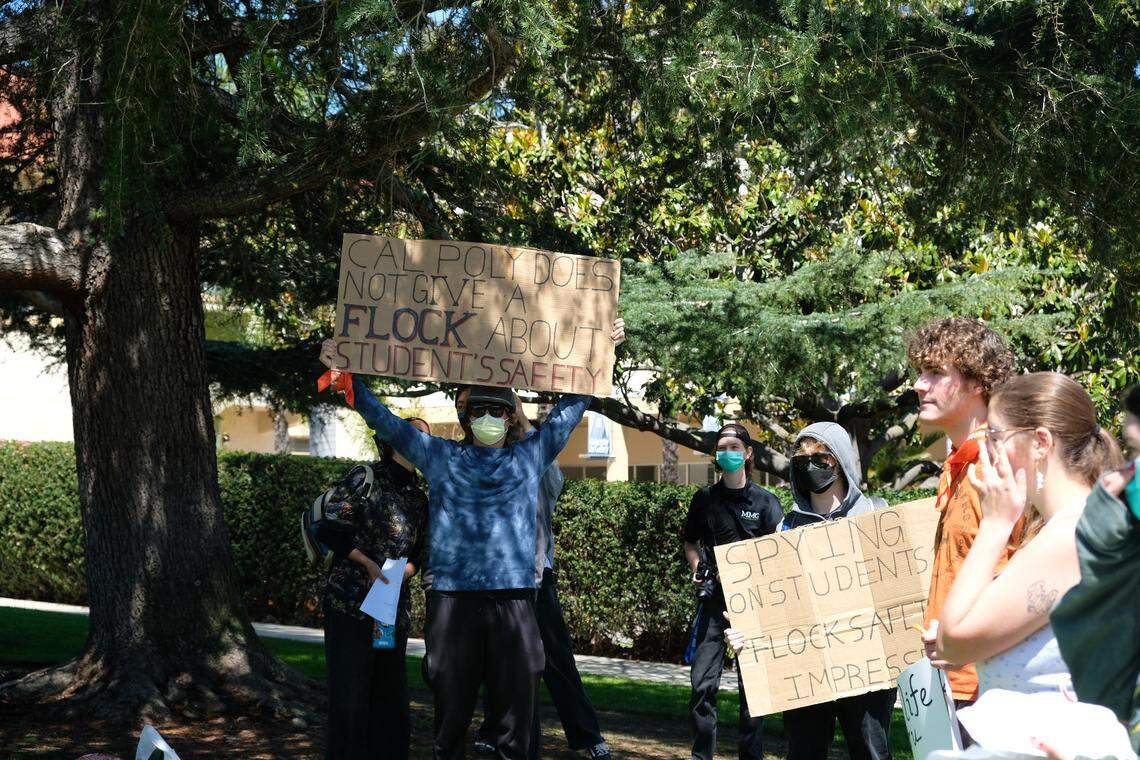
One graduate student, who spoke with The Tribune on the condition of anonymity due to fear of retribution from administrators, expressed frustration with the university's stance on the issue. The student said the protest against Flock was just one of many frustrations with Cal Poly President Jeffrey Armstrong and the university administration.
“We’ve been exhausted by the lack of accountability from admin,” the student said. “Admin has pretty consistently said that they will not get rid of ALPRs. Jeffrey Armstrong has said that no matter how many signatures are on a petition, no matter how many students speak to ASI, he’s not changing his mind... on this system. I think that’s infuriating.”
The effort at Cal Poly is not unique. Cities like Grover Beach and San Luis Obispo also use Flock cameras. Meanwhile, the organization DeFlockCentralCoast is advocating for the abolition of Flock cameras and other automatic license plate readers across six counties.
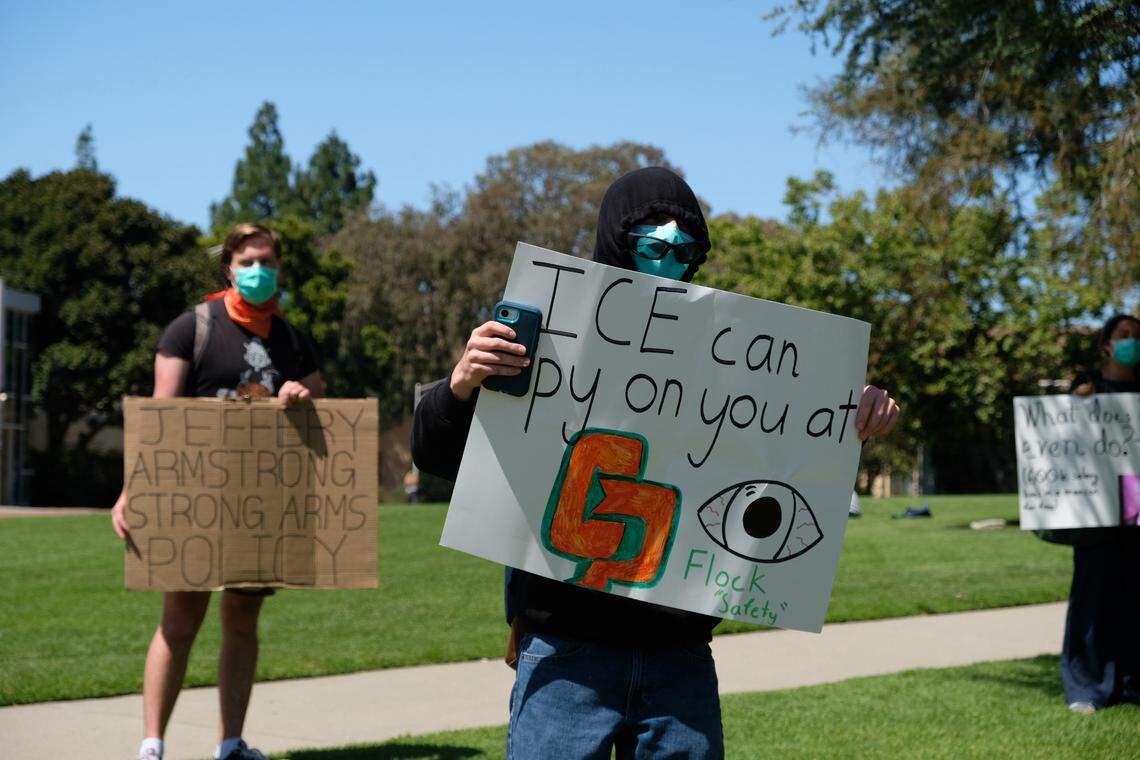
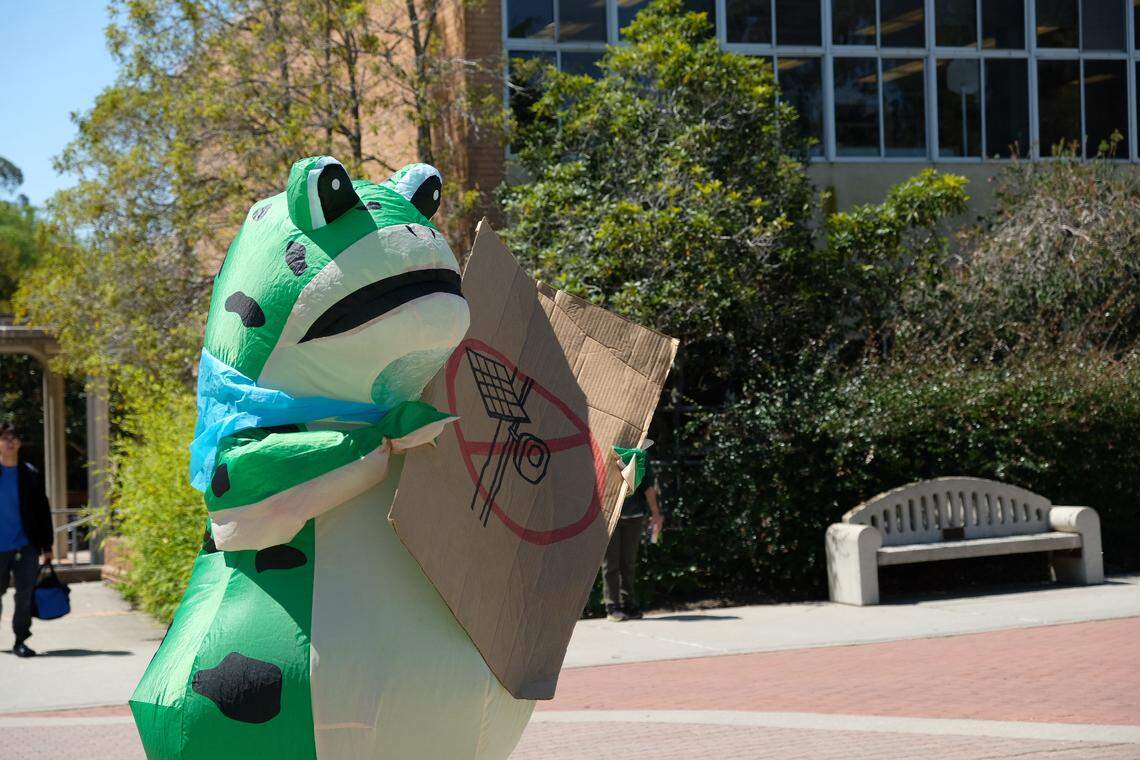
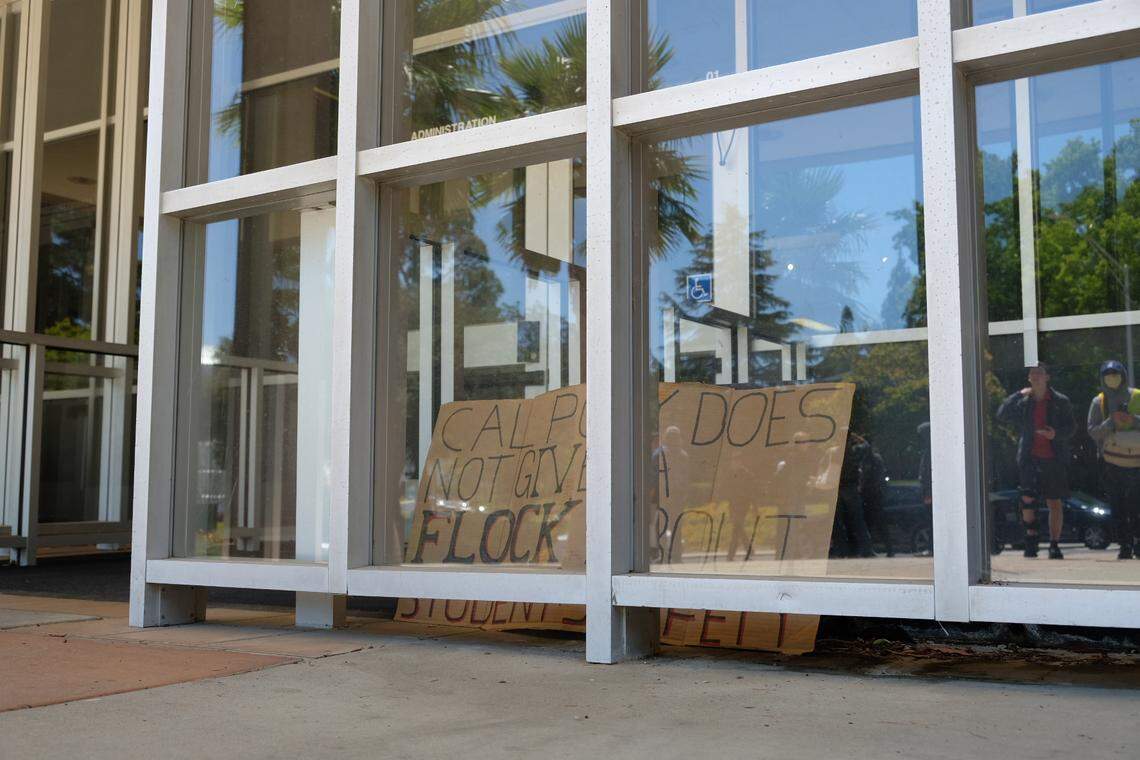
During the protest, students held signs with messages like “1984 no more” and “Cal Poly does not give a Flock about student’s safety.” One person was dressed in an inflatable frog costume, holding a sign depicting a crossed-out drawing of a flock camera. The crowd then began marching through campus, chanting and blowing whistles.
“When Cal Poly puts up Flock, we stand up and walk,” the crowd chanted. “Admin gets paid while we get played.”
Cal Poly computer science professor John Clements joined the demonstration, citing his own concerns about mass surveillance. He expressed worry that the Flock cameras could make it easier to surveil students and build a nationwide network of surveillance. He also mentioned the possibility that immigration and customs enforcement, or other government agencies, could use the systems to track the movements of people they wanted to arrest.
“There’s a pattern of the administration not listening to students,” he added. “Clearly, Flock security is not the only issue that’s going on here.”
Also present at the protest, but observing from afar, was Dean of Students Joy Pederson. According to Lazier, she was attending as part of her office’s Peace Ambassadors program, which helps foster smooth events and facilitates communication among participants, law enforcement, and other attendees.
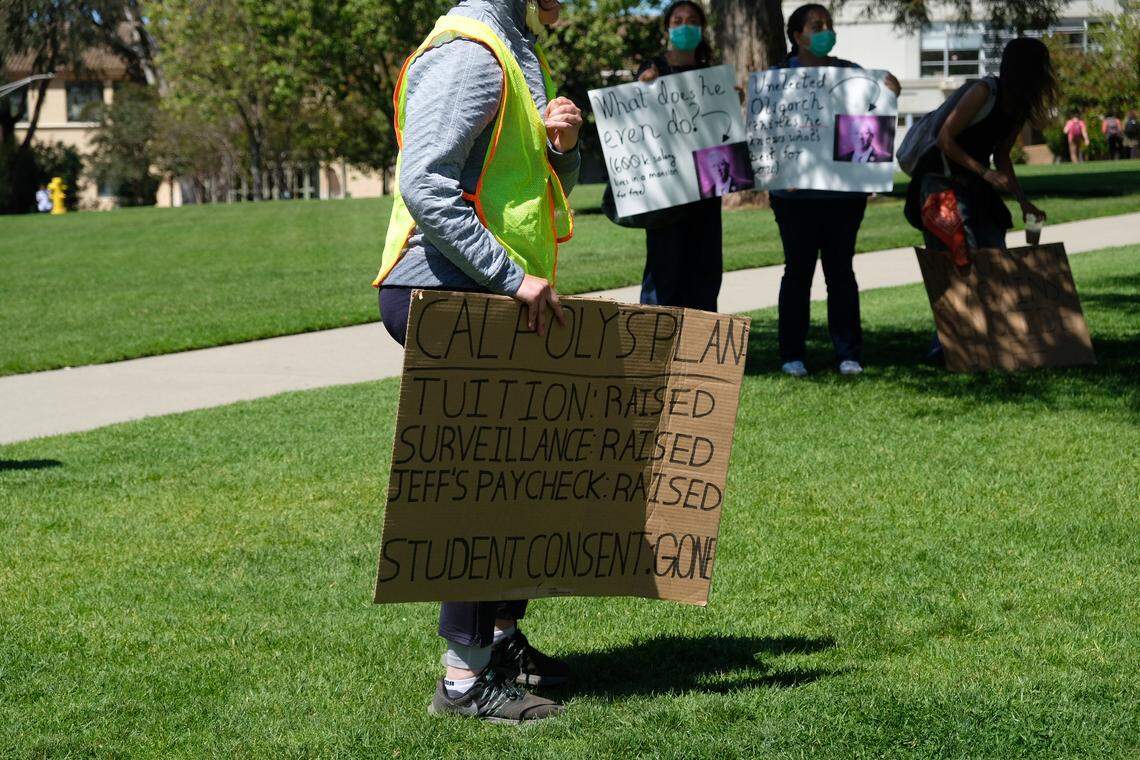
The demonstration lasted around an hour and ended at Cal Poly’s administration building, where students continued chanting and blowing whistles. The protest highlighted growing concerns about the use of surveillance technology on campus.
Cal Poly’s Response to Concerns
Cal Poly denies that the cameras can be used by ICE or other federal agencies. According to the university, the Flock cameras installed at campus entrances and exits are part of an effort to increase safety on campus. The cameras do not use facial recognition, but they do collect vehicle-related data such as license plate numbers, vehicle makes and models, and other details, along with the date, time, and location of where a vehicle was seen.
Access to license plate reader (LPR) data is strictly limited to authorized police personnel, according to a Cal Poly Police Department Q&A shared with The Tribune. LPR data is stored for 30 days, and all data is owned by Cal Poly and not Flock. The live cameras capture more details, but are not searchable in the database, the agency said. The data is retained for 30 days.
The Cal Poly Police Department maintains that it shares information with other law enforcement agencies by request only, with approval from the university chief of police. Additionally, Cal Poly is prohibited from sharing data with immigration officials unless ordered to do so by a court. The department denied that it uses the system to track students or other campus visitors.
“CPPD does not use Flock for non-investigatory purposes,” the Q&A said. “Tracking students or staff would violate both campus and CSU policy. Live feeds are not routinely monitored unless needed for an active incident.”
The department repeated that it does not cooperate with federal immigration enforcement officials and does not use the system to monitor abortion-related travel, protesters, or other sensitive activity. It also emphasized that access to the system is limited to sworn officers, dispatchers for alert monitoring and notification only, designated criminal investigators, and authorized technical staff when needed for maintenance or troubleshooting. Authorized users must complete platform training, a privacy-law briefing, and annual refresher training before retaining access.

Post a Comment for "Students at Cal Poly protest controversial surveillance cameras"
Post a Comment