
SpaceX's June 12 IPO: Why Haste Could Be Costly
The SpaceX IPO: A $1.75 Trillion Valuation and the Risks Ahead
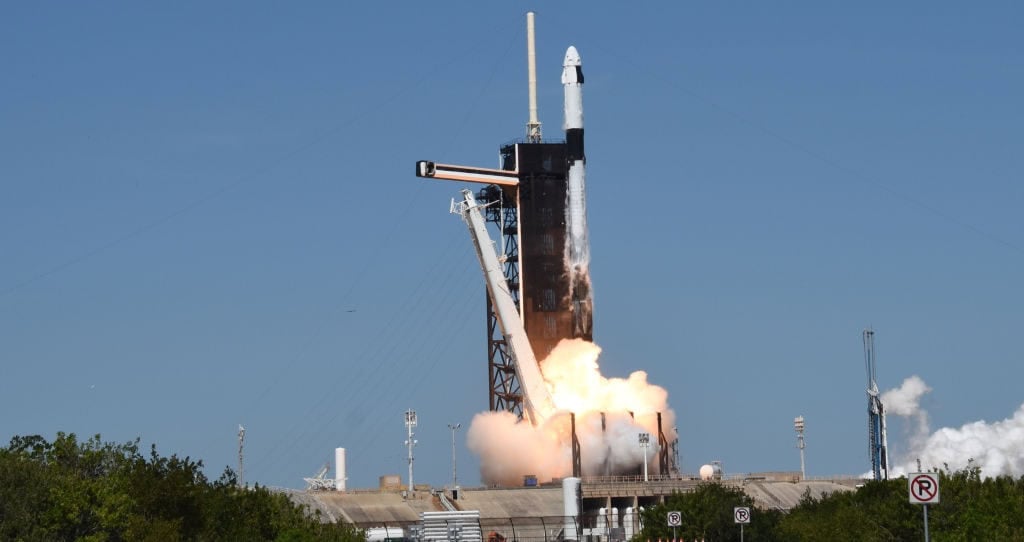
SpaceX is set to make a massive splash in the stock market with its upcoming Initial Public Offering (IPO), targeting a valuation of $1.75 trillion. This would place the company among the world’s largest publicly traded firms, even though history suggests that mega IPOs often come with significant risks for retail investors.
The excitement surrounding the IPO has been immense, especially for those who have long watched private companies stay private for extended periods. For many, this is an opportunity to own a piece of one of the most influential companies in the modern space economy. However, before jumping on board, it's important to understand the potential pitfalls that come with such a high-profile offering.
Mega IPOs Often Underperform
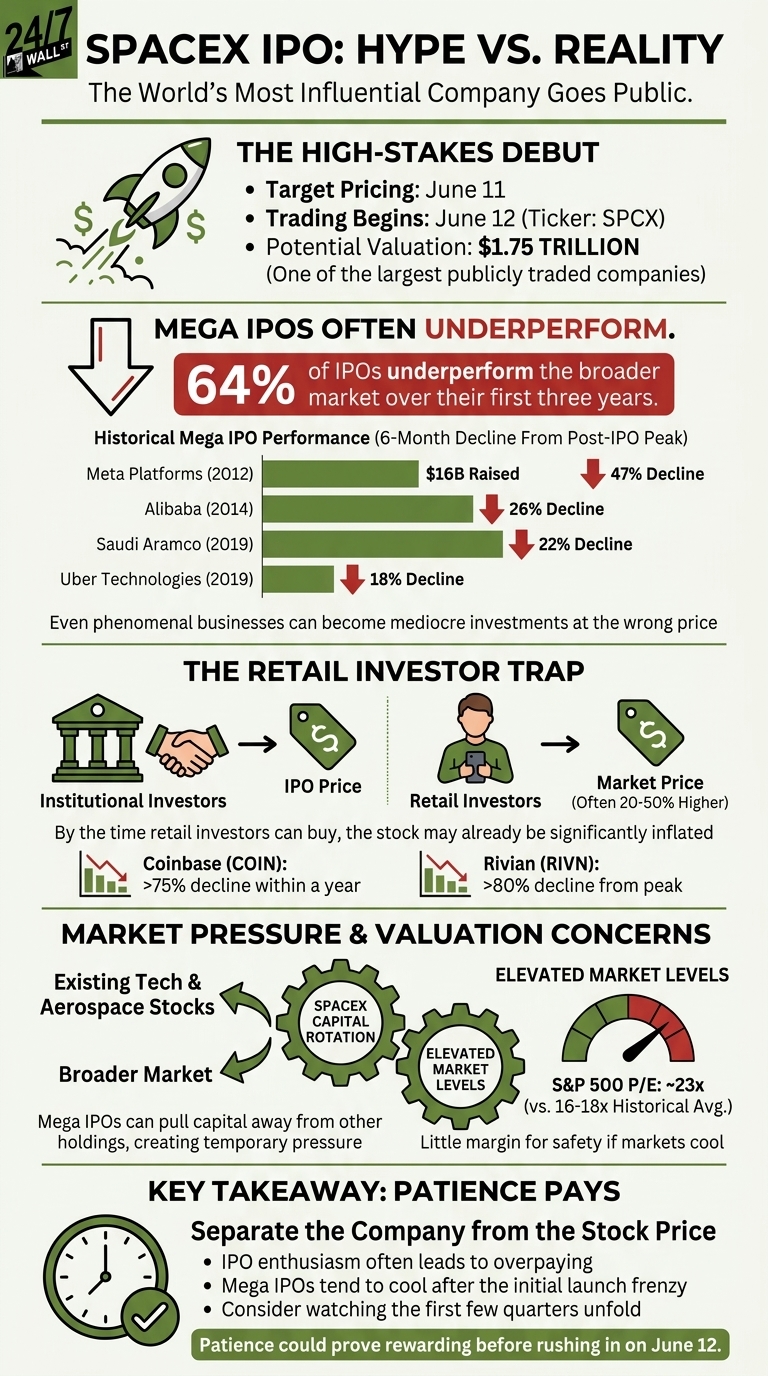
Historically, many large IPOs have struggled to maintain their initial hype. According to Nasdaq research, nearly 64% of IPOs underperform the broader market over their first three years. Some have dropped by more than 10 percentage points as the initial excitement fades and valuations normalize.
Here are some notable examples:
- Meta Platforms (NASDAQ:META) - 2012, $16 billion raised, 47% decline from post-IPO peak
- Alibaba (NYSE:BABA) - 2014, $21.8 billion raised, 26% decline
- Saudi Aramco - 2019, $25.6 billion raised, 22% decline
- Uber Technologies (NYSE:UBER) - 2019, $8.1 billion raised, 18% decline
Even companies like Coinbase Global (NASDAQ:COIN) and Rivian Automotive (NASDAQ:RIVN), which saw massive initial gains, later experienced sharp declines as market conditions changed.
Retail Investors Face the "Retail Trap"
One of the biggest challenges for retail investors is that they often don’t get the best pricing during an IPO. Institutional investors, such as hedge funds and large banks, typically receive shares at the IPO price before trading opens. By the time retail investors can buy, the stock may already be trading significantly higher.
This “retail trap” has played out before. For example, when Coinbase debuted in 2021, it was valued above $85 billion. Within a year, shares had fallen by more than 75%. Similarly, Rivian briefly reached a valuation larger than Ford, only to lose over 80% of its value.
Even if a company is fundamentally strong, a high valuation can leave little room for growth. If the entry price is too steep, even a great business can become a poor investment.
The Broader Market Impact
Another concern is how the SpaceX IPO might affect the broader market. Mega IPOs often pull capital away from existing stocks as investors reallocate their portfolios. This could lead to temporary pressure on other tech and aerospace stocks.
Additionally, if the broader market weakens after the IPO, newly public companies may suffer first as early investors rush to lock in profits. The S&P 500 is currently trading near 23 times forward earnings, well above its historical average of 16 to 18 times. Adding another ultra-premium valuation to the mix could leave little margin for error.
Key Takeaway: Patience May Be the Best Strategy
While SpaceX is undoubtedly a powerful and innovative company, its stock price may not reflect its true long-term potential. Investors should separate the company from the stock price and consider whether the current valuation makes sense.
Patience could prove to be the best approach. Instead of rushing into the market frenzy on June 12, investors may want to watch the first few quarters unfold and assess how the company performs in the public market.
Planning for Retirement?
Retirement planning doesn’t have to feel overwhelming. The key is finding expert guidance. SmartAsset’s simple quiz makes it easier than ever for you to connect with a vetted financial advisor.
- Answer a few simple questions
- Get matched with vetted advisors
- Choose your fit
Why wait? Start building the retirement you’ve always dreamed of. Get started today!

Post a Comment for "SpaceX's June 12 IPO: Why Haste Could Be Costly"
Post a Comment