
Organic Matter Fuels Spring Growth
The Importance of Winter Organic Material in Native Landscapes
In a native landscape, winter plays a crucial role in the cycle of growth and renewal. One of the final gifts of winter for spring is the organic material that remains on the ground. This natural layer of dead plant matter serves as a vital resource for the ecosystem, providing shelter for garden invertebrates and contributing to soil health.
Many gardeners, including myself, are slow to remove native beds because they often find that beneficial wildlife uses the dead organic material for protection. Additionally, unexpected cold snaps can occur even in April, making it challenging to keep up with garden tasks.
As spring temperatures stabilize, I begin the process of "chop and drop." This method involves using the spent winter organic material as mulch for the summer instead of discarding it. By leaving this material on the soil, it can help replenish nutrients that were used during the previous year's growth. There's no need to waste this valuable resource. Mimicking natural processes by keeping organic material on site reduces waste and supports a healthier garden. It also means saving money that would otherwise be spent on mulch or compost, which may not always provide the same nutrient benefits.
This approach to gardening, known as a closed-loop ecosystem, isn't new. However, the idea of encouraging homeowners to make their urban landscapes part of this loop is gaining traction.
Sunflowers: A Model for Nutrient Cycling
To understand how this method works, we can look at sunflowers. These plants are grown both as crops and cover plants, so there's plenty of data on their nutrient content and their impact on soil fertility. Although sunflowers aren't legumes and don't fix nitrogen from the air, their deep root systems can access nitrogen from deeper soil layers or recycle nitrogen left behind by decomposing plant material.
Sunflower stems are rich in potassium, which is absorbed before flowering. Nitrogen (N) and phosphorus (P) are distributed more evenly throughout the roots, leaves, and stems. In nature, whether alive or dead, the entire plant contributes to soil fertility. As sunflowers grow, their deep roots help break up compacted soil, and when they decompose, the organic matter they leave behind becomes available to other plant root systems.
The most effective way to release these valuable nutrients is to return the stems and other plant material directly to the soil through the "chop and drop" method.
Using Native Plants for Wildlife and Soil Health
I view the dried stems of native plants like sunflowers and frostweed as a rich source of organic material ready to nourish the next generation of plants. I leave some of these larger-stemmed plants where they fall, allowing any remaining seeds to be eaten by small birds. For the remaining large-stem plants, I cut them, bundle them together, and leave them as shelter against winter winds.
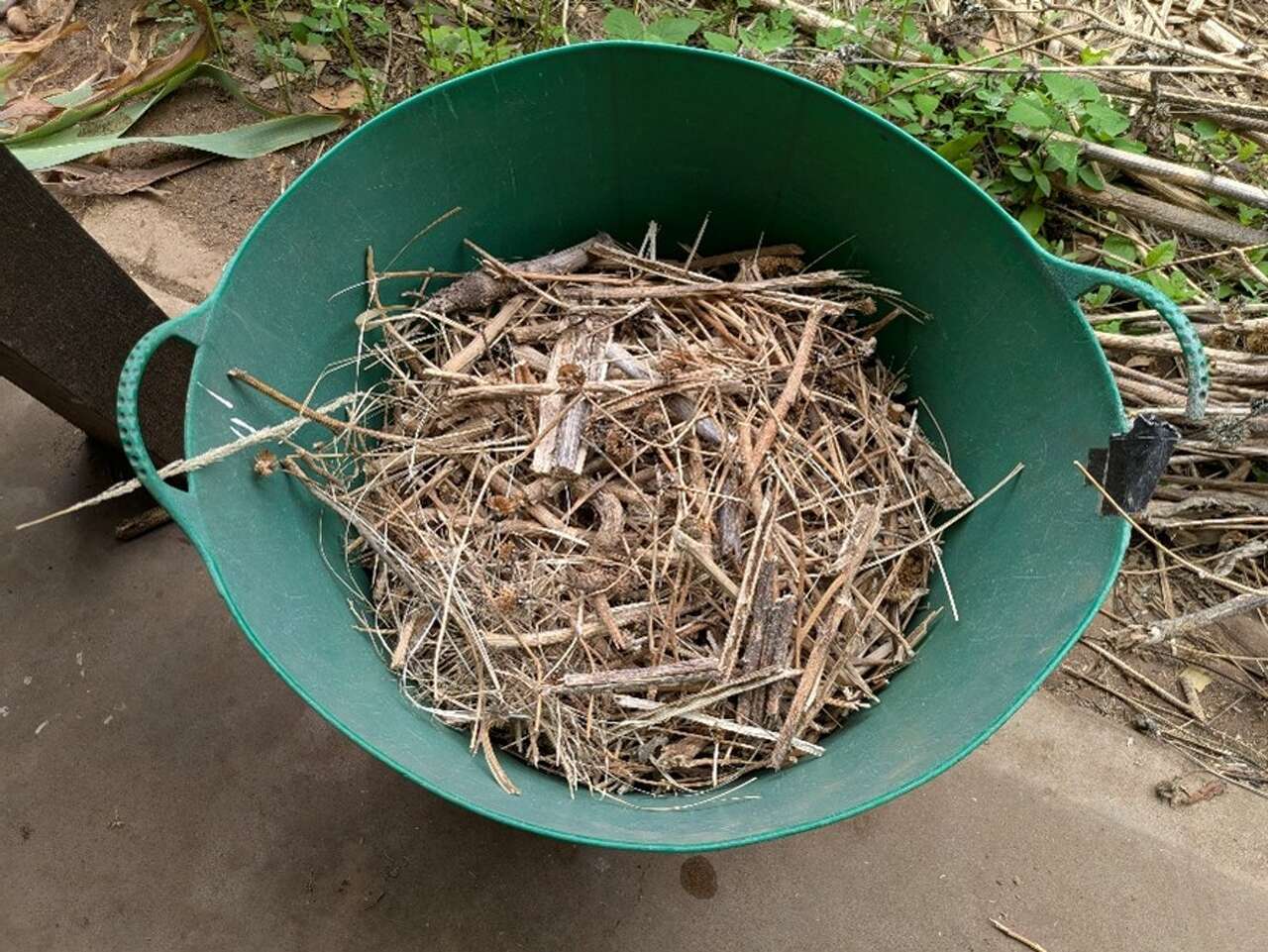
When I cut them, I leave about 12 inches of stem above the ground. These stems will eventually hollow out, providing winter shelter or nesting habitat for native bees. In the spring, I gather all the spent stems, lay them across a large trug, and use loppers to chop them into 4- to 6-inch pieces. I then place the homegrown mulch directly where it's needed most.
For smaller native plants such as Gregg’s blue mistflower or fall aster, the stems can be easily broken by hand into smaller 3- to 4-inch pieces and left on the soil surface. When pruning back old growth from tall ornamental grasses like Lindheimer’s muhly, I leave the plant material directly on the ground.
A New Vantage Point
After completing this process, I always feel refreshed as a new vista of color and form emerges from the monotone brown of winter. This transformation is a testament to the power of working with nature rather than against it.
If you have questions about this approach or want to learn more, you can contact the AgriLife office in Odessa at 498-4071 or in Midland at 686-4700. Additional information and past articles are available at westtexasgardening.org. Click on the ‘Resources’ tab for more details.

Post a Comment for "Organic Matter Fuels Spring Growth"
Post a Comment