
Long Island Rail Road Strike Disrupts Commuters
The Long Island Rail Road Strike: A Major Disruption for Commuters
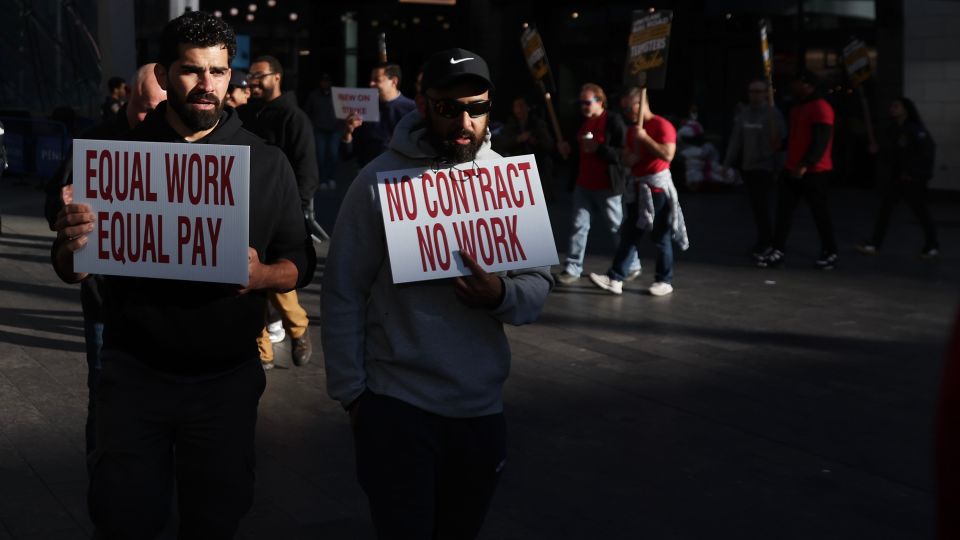
The Long Island Rail Road (LIRR), the nation’s largest commuter railroad, is currently facing a strike by its transit workers, which has led to a complete halt in train traffic. This marks the first time the railroad has experienced a strike since 1994 and could potentially leave hundreds of thousands of weekday passengers stranded in the New York City area.
The strike involves five unions representing approximately 3,500 workers. These unions failed to reach an agreement with railroad management on wages and work rules on Friday, leading to the current standoff. Kevin Sexton, vice president of the Brotherhood of Locomotive Engineers and Trainmen and spokesperson for the unions, stated that after two days of round-the-clock negotiations, no deal was reached.
The unions are seeking their first raise since 2022, a period marked by some of the highest cost-of-living increases in decades in one of the nation’s most expensive markets. There have been no reports of new talks between the two sides as of late Saturday morning.
Impact on Ridership and Revenue
The LIRR, like most mass transit systems, has not yet fully recovered all the ridership it had in 2019 before the pandemic, but it is now back to about 90% of pre-pandemic levels. Last year, the LIRR generated $636 million in fare revenue, or roughly $2 million per weekday. During the strike, the railroad stands to lose this amount daily, and customers with monthly passes will receive a prorated refund of those fares.
Union Demands and Management Response
The unions on strike represent engineers, signalmen, and machinists. Conductors are not on strike but are union members who are honoring the picket lines. The five unions had been seeking raises in the 4% to 5% range. Two federal panels that heard arguments from both sides sided with the union position, according to the unions. However, management came close to that offer but then demanded that union members accept increased costs for healthcare coverage, which the union found unacceptable.
Nick Peluso, national vice president of the Transportation Communications Union, criticized the MTA and Governor Hochul for creating frustration and gridlock for commuters instead of settling the contract. Janno Lieber, CEO of the MTA, blamed the unions for the failure to reach an agreement, stating that the unions’ strategy is to inconvenience Long Islanders and force the MTA and the state into a bad deal.
Struggles for Commuters
Commuters now face the challenge of finding alternative transportation, especially during a time when gas prices have surged and new tolls are in place on all cars entering Manhattan’s business district. While the strike started at 12:01 a.m. ET on Saturday, its impact will be most severe on Monday, when nearly 300,000 commuters travel in and out of the city.
The MTA has limited bus service available, which can accommodate only about 13,000 riders in the morning and another 13,000 in the evening. The agency is urging customers to work from home, avoid non-essential travel, and allow extra time for any form of transportation into the city.
Top Officials Respond
New York Governor Kathy Hochul condemned the strike as “reckless” and argued that union demands threaten to make fares too high for riders. She urged the unions and MTA to return to the table and continue negotiations until a deal is reached.
Janno Lieber of the MTA stated that his agency could not agree to the unions’ wage demands, emphasizing that they cannot responsibly make a deal that would destabilize the MTA’s budget. He added that the MTA refuses to make a deal that would put the burden of funding outsized wage increases on riders and taxpayers.
Legal and Political Context
Railroads operate under a different labor law than most businesses in the country, making it more difficult for unions to go on strike. However, the barriers in the law to limit strikes—such as mediation, cooling-off periods, and government panels considering bargaining positions—have all been cleared by the unions. At this point, the only way to get the workers back on the job is through a labor deal acceptable to rank-and-file members.
Congress can intervene to broker a deal, as it did in December 2022, when it prevented a national freight railroad strike due to economic concerns. However, the LIRR does not pose the same risk to the economy as freight railroads, and Congress did not act in 2025 when the engineers’ union at New Jersey Transit went on strike for three days.
Governor Hochul, who is up for reelection this November, also targeted the Trump administration, suggesting that the strike was a result of the previous administration's actions. President Donald Trump responded on Truth Social, denying any responsibility for the strike and accusing Hochul of blaming him unfairly.

Post a Comment for "Long Island Rail Road Strike Disrupts Commuters"
Post a Comment