
How Trump Empowers Military Contractors to Exploit Taxpayers
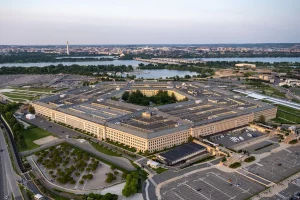
The Pentagon’s New Contracting Era
In recent years, the U.S. Department of Defense has embraced new contracting processes that significantly increase profits for military contractors. This trend is gaining momentum under the Trump administration, with the military-industrial complex expressing strong support.
Traditionally, when the government purchases a product or service, it uses competitive contracts to ensure that taxpayers receive fair value. However, in recent decades, the Department of Defense, with the approval of bipartisan lawmakers, has adopted alternative methods that allow contractors to bypass many of the regulations set by the Federal Acquisition Regulations (FAR). These alternative processes often result in less oversight and more favorable terms for the contractors, which can be detrimental to U.S. taxpayers.
Julia Gledhill, a research analyst at the Stimson Center, highlighted this issue: “The Pentagon is increasingly relying on rapid acquisition pathways that subvert competition to acquire weapons.” She added that legislators have effectively limited the Pentagon’s ability to negotiate fair contracts, leading to situations where both the military and taxpayers are being exploited by these companies.
Expansion of Alternative Contracting Mechanisms
Alternative contracting mechanisms, such as "non-traditional contracting" and "Other Transaction Authority" (OTA) procurement, have seen significant growth over the past decade within agencies like the DOD and the Department of Homeland Security. This shift has transformed a process originally intended for innovative products into a major vehicle for basic procurement from established military contractors.
In 2025, OTA contracts accounted for over $18 billion in government spending. These contracts have become more common and expensive than traditional procurement agreements. Bill Hartung, a senior research fellow at the Quincy Institute for Responsible Statecraft, noted that “the OTA is an existing vehicle that, if they expand it, it helps speed the money out the door.” He emphasized that these contracts involve less record keeping and scrutiny, making them ideal for benefiting both old and new contractors.
Trump's Executive Order and Industry Response
In April 2025, President Trump signaled his intention to accelerate the shift toward rapid acquisition processes through an executive order aimed at overhauling the DOD’s procurement process. The order specifically requested that new processes “expedite acquisitions…including a first preference for commercial solutions and a general preference for Other Transactions Authority.”
This move has been warmly received by the military-industrial complex. On an April 23 earnings call, Lockheed Martin President Jim Taiclet described the situation as a “golden opportunity right now based on who’s in government.” He emphasized that moving away from the FAR cost-based system toward a commercial contracting model would benefit both the company and the government.
Lockheed Martin has secured nearly $50 billion in government contracts since 2008, with over 97% of these contracts involving the Department of Defense. The last quarter of 2025 marked their most successful season of contracts ever. In 2024, they were the fourth-highest recipient of OTA contracts, trailing only Northrop Grumman.
Growth in Lobbying and Profit Margins
Military contractors have also increased their lobbying efforts to influence acquisition policies. In 2025, the defense industry collectively spent a record-breaking $198 million to sway lawmakers on both sides of the aisle. This spending reflects the industry's growing influence and its ability to shape policies that favor its interests.
Northrop Grumman executives echoed the enthusiasm for the expansion of OTAs. On an April 22 earnings call, President Kathy Warden stated that the company is seeing more use of OTAs and other nontraditional contracting mechanisms. These contracts have proven lucrative for Northrop Grumman and its subsidiaries, which secured nearly $7 billion in total Defense Department contracts in 2025.
Defense contractors’ profit margins are significantly higher than those in most other industries. While typical commercial industries see profits around 6%, many military contractors achieve at least 15% in profits, largely funded by U.S. taxpayers. Military contractors have received more than half of all Pentagon spending since 2020, and as the industry becomes more consolidated, remaining companies exert even greater control over the Pentagon.
Ongoing Challenges and Concerns
The Pentagon continues to face challenges in financial accountability. It failed its financial audit for the eighth consecutive year, with auditors identifying significant accounting errors, missing information, and billions of unaccounted dollars. The agency remains the only major U.S. federal agency that has never passed an audit.
Gledhill noted that “we’re experiencing one of the biggest military spending buildups in American history,” highlighting the potential for exploitation given the combination of a $1.5 trillion military budget and a less competitive, less accountable weapons acquisition process.
The use of OTAs may also prove beneficial for the DOD as it launches Trump’s Golden Dome Project, estimated to cost up to $1.2 trillion over 20 years. This project, heavily reliant on satellites, could benefit from Trump’s December 18, 2025 executive order, which encourages agencies to prioritize commercial solutions and OTAs for streamlined acquisitions.

Post a Comment for "How Trump Empowers Military Contractors to Exploit Taxpayers"
Post a Comment