
How Do U.S. Forces Choose Their Operation Names?
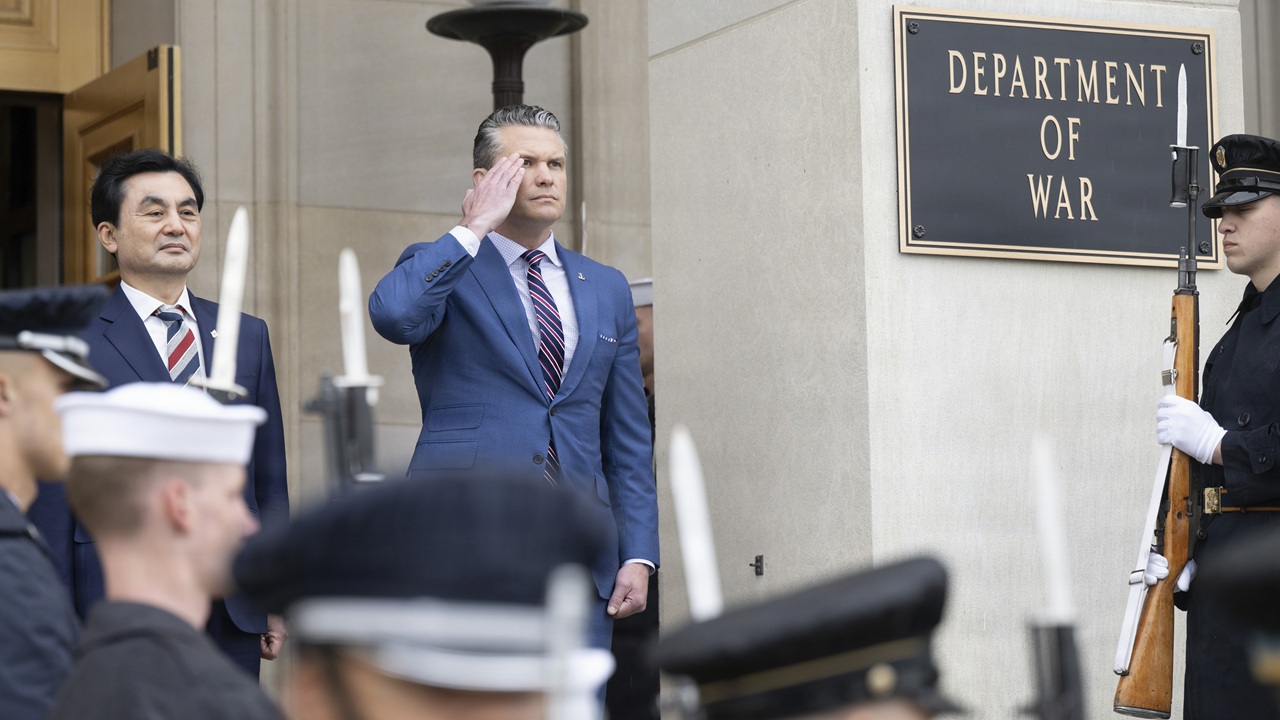
The Power of a Military Operation Name
During World War II, Winston Churchill cautioned that operation codenames should not be "boastful or overconfident." Secretary of Defense Pete Hegseth appears to hold a different view. Even before the United States military launched Operation Epic Fury, several media outlets questioned who chose the names for some recent military operations:
- "Operation Rough Rider," the US campaign to ensure freedom of navigation in the Middle East;
- "Operation Midnight Hammer," last June’s airstrikes on Iran’s nuclear program; and
- "Operation Southern Spear," the narcotic interdiction campaign in the Caribbean and eastern Pacific.
Secretary of Defense Pete Hegseth seems to have selected the names to project a message of lethality, but for many, they have often had the opposite effect. Instead of lethality, the names have evoked widespread mockery, with Internet commentators comparing them to the titles of homoerotic adult films.
What’s in an Operation Name?
Hegseth and company aren’t the first to come up with an operation name that was soon called into question. One particular incident from the past two decades was Steadfast Jazz 2013, a NATO training exercise that may have concluded with someone saying, "And all that jazz!" Other infamous names include the US military’s 1988 intervention in Honduras, dubbed "Operation Golden Pheasant"; World War II’s "Operation Toenails," the 1943 invasion of New Georgia; and, perhaps most infamously of all, "Operation Frequent Wind," the 1975 evacuation of American and Vietnamese citizens from Saigon amid the collapse of South Vietnam.
The 1998 bombing campaign of Iraq was given the codename "Operation Desert Fox." It remains controversial for two reasons. First, critics of the Clinton administration voiced suspicion that it was meant to distract from President Bill Clinton’s testimony before a grand jury during the unfolding Monica Lewinsky scandal. Second, some media outlets noted that the "Desert Fox" had been the nickname of German Field Marshal Erwin Rommel, one of the United States’ most skillful enemies during World War II. The US Joint Chiefs of Staff stated the name was chosen to reflect the "surprise" nature of the air strikes and had no ties to Rommel, but history buffs were likely to think of the German military leader.
Different Countries Do Operation Names Differently
The widespread use of operation names began during World War II. The use of codenames was meant to hide the true nature of a plan from the enemy, and to allow staff to easily reference complex, synchronized actions in discussion with one another.
Early Allied operations were initially based on color to avoid giving away too much. Colors served as visible, memorable identifiers for unit location and status for high-level commanders, allowing them to manage complex, multi-unit movements. But there were downsides to this approach, as there are only so many colors to choose from.
During World War II, Nazi Germany used "colorful" codenames in addition to regular operation names. "Case Blue," for instance, was the codename for the 1942 summer offensive in southern Russia—culminating in the 1942–1943 Battle of Stalingrad, widely considered the turning point of the war in Europe.
By contrast, the Nazi invasion of the Soviet Union a year earlier was dubbed "Operation Barbarossa," named after the 12th-century Holy Roman Emperor Frederick Barbarossa. Adolf Hitler, who personally chose the name, meant it to symbolize a "crusade" to establish German dominance in Eastern Europe and to invoke the legacy of the medieval Holy Roman Emperor Frederick I. Ominously for Hitler, though, Barbarossa the emperor died on his way to the Holy Land and never actually fought in the crusades. It couldn’t be said to have been a great portent—especially considering how the campaign later turned out for Berlin.
Still, the Allies soon began to devise more complex codenames. Colors became too limiting as the number of plans increased, and there was a valid concern that they often hinted at the nature of the operation.
There Are Political Considerations in Naming an Operation
As new options were considered, British Prime Minister Winston Churchill stated that codenames shouldn’t be frivolous, quipping that no mother would want to learn that her husband or son had been killed in "Operation Bunnyhug." He also didn’t want the operations to be "boastful or overconfident"—a message it appears Hegseth didn’t get.
Churchill reportedly came up with the codename for the Battle of Normandy, "Operation Overlord"—but not the actual D-Day landings, which were codenamed "Operation Neptune."
The names of operations are also sometimes tweaked by political considerations. "Operation Blue Spoon," the US military’s plan to invade Panama and arrest dictator Manuel Noriega for drug trafficking, was renamed "Operation Just Cause" before it began. As then-Chairman of the Joint Chiefs of Staff Gen. Colin Powell noted, the more forceful name would lend credibility to the mission: "Even our severest critics, when attacking us, will have to say 'Just Cause.'"
"Since 1989, major U.S. military operations have been nicknamed to shape domestic and international perceptions about the activities they describe. Operation Just Cause is only the most obvious example of this phenomenon," the USO explained regarding the war of words in naming military operations.
But the operation’s domestic critics may have gotten the last laugh: they argued that then-President George H.W. Bush had invaded Panama "just 'cause' he felt like it."
Most—but Not All—Modern Codenames Are Kind of Boring
For most operation names, the US military employs a post-Vietnam War-era computer system—Code Word, Nickname, and Exercise Term System, or NICKA—for naming more routine exercises. The system does an acceptable job, but does sometimes result in some questionable names, such as the aforementioned Steadfast Jazz.
The final approval for all names rests with the Secretary of Defense, and the most visible operations are often chosen independently of the NICKA system. One example of this was "Operation Enduring Freedom," the 2001 campaign in Afghanistan, meant to play up the notion of "freedom" as a rallying cry for the United States in the aftermath of the September 11 terror attacks. By contrast, "Operation Inherent Resolve," the military intervention against the Islamic State (ISIS) terror group in Iraq and Syria in 2014, was formulated in part through NICKA, prompting criticism for its alleged blandness.
Hegseth is many things, but bland is not one of them—and this helps to explain how the recent campaigns undertaken by the US military seem to sound too much like straight-to-video action movies. This week, the Pentagon speculated that the war with Iran could be renamed "Operation Sledgehammer" if the current ceasefire collapses. Let the jokes continue!
About the Author: Peter Suciu
Peter Suciu has contributed to dozens of newspapers, magazines and websites over a 30-year career in journalism. He regularly writes about military hardware, firearms history, cybersecurity, politics, and international affairs. Peter is also a contributing writer for Forbes and Clearance Jobs. He is based in Michigan. You can follow him on Twitter: @PeterSuciu. You can email the author: Editor@CryptoLiveDaily.org.

Post a Comment for "How Do U.S. Forces Choose Their Operation Names?"
Post a Comment