
First US Navy Sailors Trained at Cutting-Edge Laser Lab
The US Navy's Commitment to Laser Technology
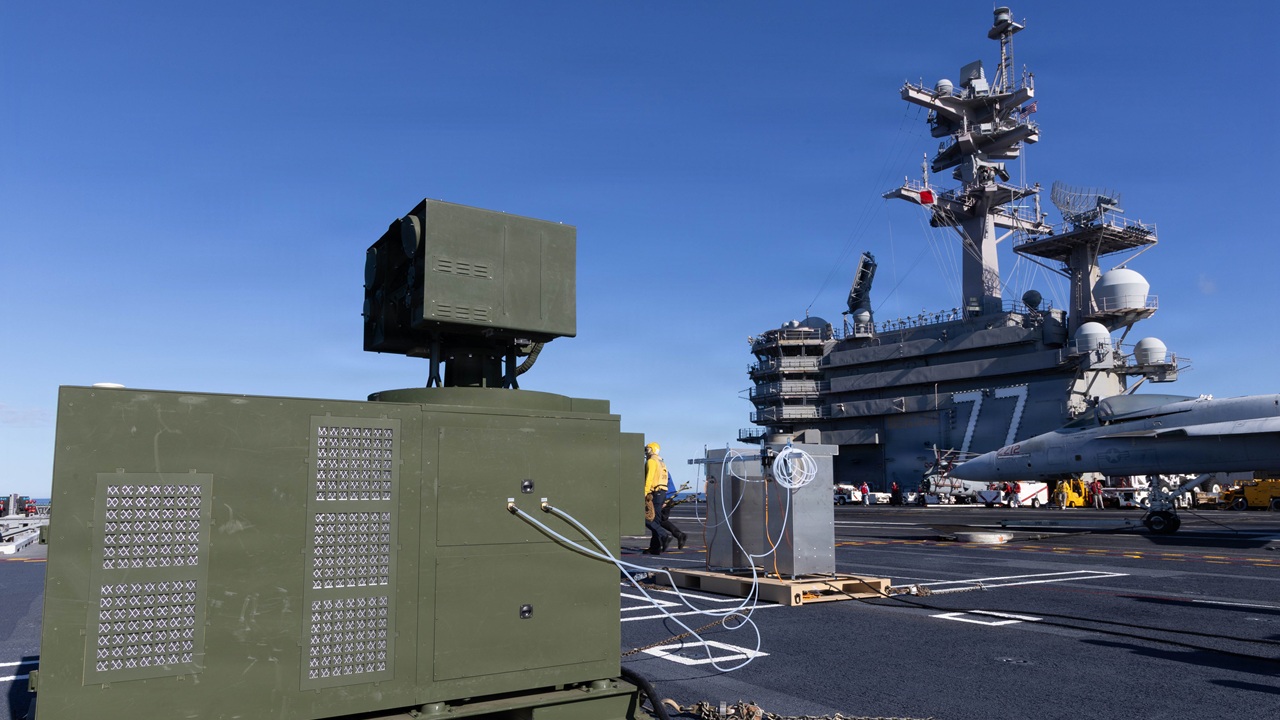
The US Navy has made a significant investment in the "ODIN," an anti-drone laser system, and is now beginning to train its sailors on how to use it. This marks a pivotal step in the development of directed energy weapons (DEWs), which are gaining traction across military forces worldwide.
While science fiction often portrays futuristic death rays or phasers, the reality of DEWs is more grounded. However, these systems show promise in countering drones and other aerial threats. The US Navy has taken a more serious approach to developing such technology, with recent efforts focusing on training personnel to operate these advanced systems effectively.
Training Program for ODIN
After several years of development and testing, the US Navy has established a formal training program for the Optical Dazzling Interdictor, Navy (ODIN). The first group of sailors has completed the initial course at the Naval Surface Warfare Center, Port Hueneme Division (NSWC PHD)'s Directed Energy Systems Integration Laboratory (DESIL).
DESIL has been designated as the official "schoolhouse" for ODIN, with seven units currently stationed on Navy ships. The new training program aims to build on the Navy's existing knowledge of ODIN and broader DEW technologies. It also enables sailors who complete the training to earn the new "Laser Weapons System Operator Navy Enlisted Classification (NEC)," which was spearheaded by NSWC PHD.
DESIL: A Hub for Directed Energy Research
The facility, established at Naval Base Ventura County (NBVC) in Point Mugu, California, in May 2020, is a 18,500-square-foot, three-story building designed to test and evaluate laser weapons systems in a maritime environment. Its lab features rooftop and internal capabilities to test various DEWs, including lasers with direct line-of-sight to the Point Magu Sea Range. Additionally, it can utilize the 36,000 miles of controlled air and sea space.
Despite not being a formal US Navy program of record, DESIL has successfully advocated for the need to start a training program as the Navy continues to experiment with DEWs and other laser-based systems. The facility’s unique combination of subject matter experts, equipment, and infrastructure makes it well-suited to serve as the ODIN schoolhouse.
The Role of ODIN in Modern Defense
ODIN is designed to "blind the sensors of unmanned aerial systems," offering a low-cost alternative to expensive anti-aircraft missiles. Beyond its air defense role, ODIN has potential applications in intelligence, surveillance, and reconnaissance (ISR). It could be used with cameras and telescopes to enhance range and clarity, providing higher detail and resolution than existing systems.
The training provided at DESIL ensures that sailors are prepared to use these systems effectively. Lawrence Averion, directed energy branch manager at DESIL, emphasized the importance of making sure warfighters are ready to meet mission requirements and have confidence in their abilities.
Training Structure and Future Prospects
The team at DESIL has worked with the US Navy Manpower Analysis Center (NAVMAC) to establish the Laser Weapon System Operator NEC. This classification became official earlier this year, allowing sailors who complete the ODIN courses to earn the laser NEC as a fire controlman rating.
To earn the NEC, sailors must complete two courses at DESIL, each lasting around five days. These courses include classroom instruction and hands-on learning with current ODIN units. The training covers operating the platform, including tracking and locking onto targets, firing the dazzling lasers, and managing critical alerts.
Tracking potential targets remains one of the more challenging aspects of using DEWs. At range, targets may appear as little more than a pixel on an operator’s screen, making it difficult to track. The courses also provide training on maintaining ODIN and its upkeep.
As a new program, the training will initially include those at NSWC PHD, who will then serve as future instructors. This approach is more cost-effective than hiring civilian employees. Davidson Sim, a directed energy sustainment systems engineer, emphasized that the training is tailored and could translate to other DEWs, such as HELIOS or the Solid State Laser Technology Maturation system.
Expanding the Use of DEW Technology
The Navy noted that all DEW systems are based on the Laser Weapon System Console interface, allowing the schoolhouse to broaden training beyond ODIN. Teams at DESIL are also working with the Arleigh Burke-class guided-missile destroyer USS Kidd (DDG-100), which has been employed in DEW technology. ODIN is slated to undergo further testing on the warship after DDG-100 completes its maintenance availability.
Sim mentioned that over the next decade, ODIN units could be installed on ships undergoing upgrades. He stated that these systems have proven their importance in tactical environments and that the Navy has overcome the challenges of embracing directed energy, laying the foundation for future systems.

Post a Comment for "First US Navy Sailors Trained at Cutting-Edge Laser Lab"
Post a Comment