
Final Freedom-Class LCS USS Cleveland Arrives in Ohio Ahead of May Commissioning
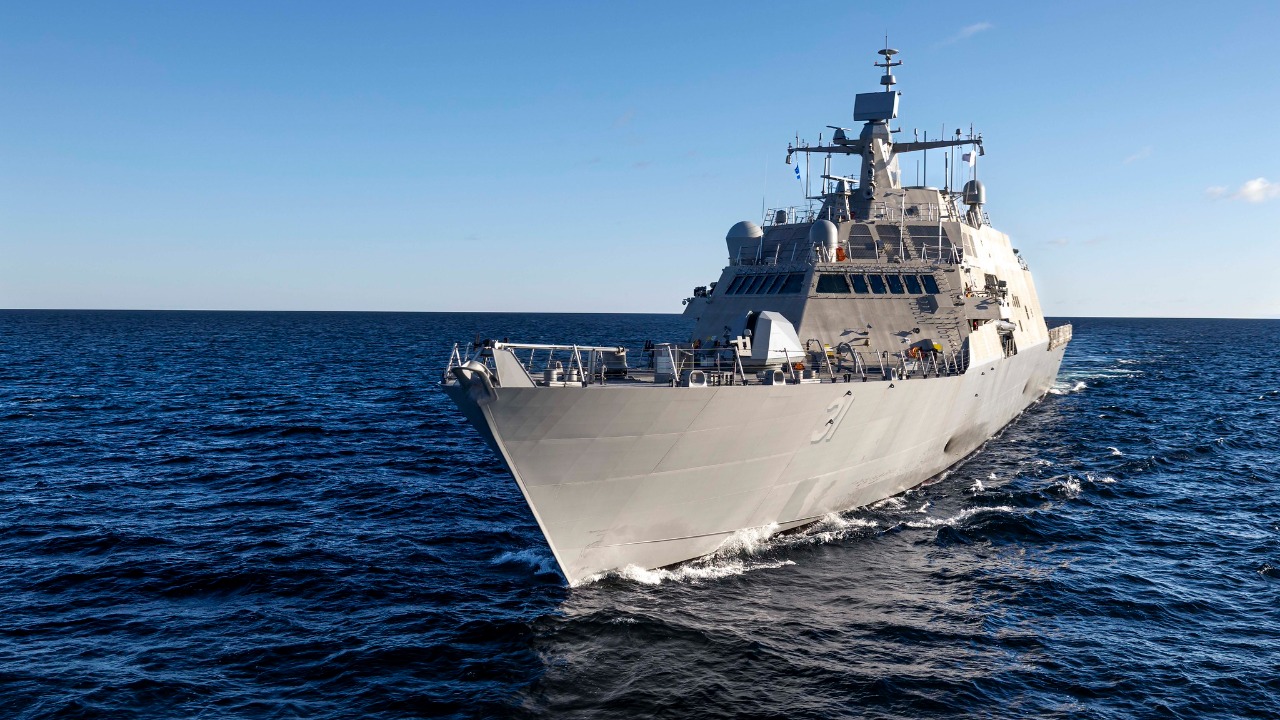
The Arrival of the Future USS Cleveland
The future USS Cleveland made its way into the harbor of its namesake city on May 9, 2026, welcomed by local officials and a small gathering along the waterfront. This marked the end of a journey that began at the shipyard in Marinette, Wisconsin, where the warship was constructed. The arrival heralds a week of events leading up to the Navy’s commissioning of LCS 31 on May 16, an official ceremony that will officially place the sixteenth and final Freedom-class littoral combat ship into active service.
Following the commissioning, the ship will travel south to its permanent homeport at Naval Station Mayport, Florida, where it will join other surface combatants assigned to the Atlantic Fleet. The commissioning signifies the conclusion of a production run that started nearly two decades ago and became one of the most controversial shipbuilding programs in modern Navy history.
A Namesake Tradition Continues
Cleveland has been associated with Navy warships for over a century, including a World War II-era light cruiser and a Cold War-era amphibious transport dock. LCS 31 continues this tradition into a new era of naval warfare. The Cleveland City Council swiftly issued a formal welcome and celebration announcement, treating the ship’s visit as a civic milestone.
The commissioning ceremony is scheduled for 10 a.m. EDT on May 16 in Cleveland. According to a Navy press release, the acting Secretary of the Navy and elected officials are expected to speak. Details about public access and the full event schedule have not yet been published, so residents interested in attending should keep an eye on Navy social media accounts and local news outlets for updates.
The Last Hull Off the Line
LCS 31 was christened and launched at Fincantieri Marinette Marine’s shipyard on the Menominee River during a ceremony described by the Department of Defense as the last planned side-launch at the facility. In a side-launch, the completed hull slides laterally into the water rather than moving bow-first down a slipway. This is a dramatic, traditional method of shipbuilding, and with no additional Freedom-class hulls on order, it ended with this ship.
The Navy’s public affairs video of the arrival, published through the Defense Visual Information Distribution Service, identifies LCS 31 as the final Freedom-variant vessel to be built and commissioned. The footage shows the ship mooring in Cleveland and leaves no doubt: the Freedom-class production line is complete.
The Marinette shipyard has already shifted focus to building the Navy’s next-generation Constellation-class guided-missile frigates, a program expected to sustain the workforce for years. However, no official data has been released regarding how many workers transitioned from LCS construction to the frigate program or whether specialized skills developed for the littoral combat ship are being retained.
A Program Defined by Speed and Setbacks
The Freedom class emerged from a post-9/11 initiative to build fast, affordable, and versatile warships capable of operating in shallow coastal waters. The concept featured a modular design, allowing for swappable mission packages that could be configured for surface warfare, anti-submarine warfare, or mine countermeasures based on the threat. At around 3,500 tons and capable of speeds exceeding 40 knots, the Freedom variant was among the fastest combatants in the fleet.
The littoral combat ship program produced two variants in parallel. The Freedom class, built by Lockheed Martin’s team at Marinette Marine, includes sixteen hulls. The Independence class, a trimaran design built by Austal USA in Mobile, Alabama, also produced a separate line of ships. Together, the two variants make up the LCS fleet.
However, the Freedom class faced persistent mechanical failures. Multiple early ships suffered engineering casualties linked to defects in their combining gears, a critical propulsion component manufactured by RENK AG. These issues were severe enough that the Navy decommissioned several hulls, including USS Freedom (LCS 1), USS Fort Worth (LCS 3), USS Milwaukee (LCS 5), and USS Detroit (LCS 7), before their expected service lives. Congressional Research Service reports documented these patterns and raised concerns about the return on investment for ships that cost between $360 million and $500 million each.
Whether LCS 31 incorporates engineering fixes that address these earlier propulsion failures remains unconfirmed in any official release reviewed for this report. This distinction is important: if the final ship in the class shares the same mechanical vulnerabilities as its predecessors, its operational lifespan could fall short of what fleet planners anticipate.
From Ceremony to Sea Trials
Commissioning is a formal milestone, but it does not mean a warship is ready for deployment. After the May 16 ceremony, USS Cleveland will sail to Mayport and begin a series of post-commissioning steps, which typically include shakedown cruises, crew certification exercises, and the installation and testing of mission-module equipment. This process can take months depending on schedules and any technical issues that arise.
No official source has outlined a specific deployment timeline or mission profile for LCS 31 once it reaches operational status. The Navy has also not publicly stated which mission packages will be prioritized for the ship.
For the city of Cleveland, the week’s events offer more than just fleet planning: it is an opportunity to see a warship bearing the city’s name up close before it heads to sea. The core facts are confirmed. LCS 31 is in Cleveland, the commissioning is set for May 16, and the ship will head to Florida afterward. Everything beyond that—how long it serves, where it deploys, and whether it avoids the mechanical troubles that plagued its sister ships—will be determined not by ceremony but by what happens once USS Cleveland is underway.

Post a Comment for "Final Freedom-Class LCS USS Cleveland Arrives in Ohio Ahead of May Commissioning"
Post a Comment