
Explore the World's Most and Least Religiously Diverse Nations
The Global Landscape of Religious Diversity
Religion plays a significant role in shaping the cultural and social fabric of societies around the world. From the number of deities worshipped to the regions where they originated, religions vary greatly in their beliefs, practices, and texts. These differences contribute to the appeal of various faiths across different populations, often transcending political boundaries.
In many countries, religion is deeply intertwined with national identity. Some nations are closely associated with a single faith, while others boast a rich tapestry of religious traditions. The degree of religious diversity or homogeneity can be vast, with some countries dominated by one major religion and others hosting a wide array of faiths within their borders.
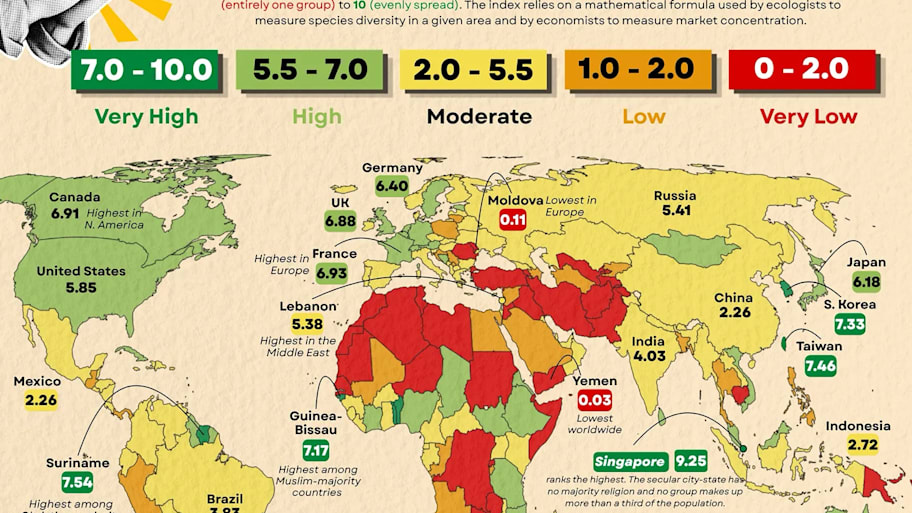
According to a study by the Pew Research Center, there is a noticeable variation in religious diversity across the globe. This research includes a map that illustrates how different countries approach religion, highlighting both the most and least diverse regions.
Asia's Most Religiously Diverse Nations
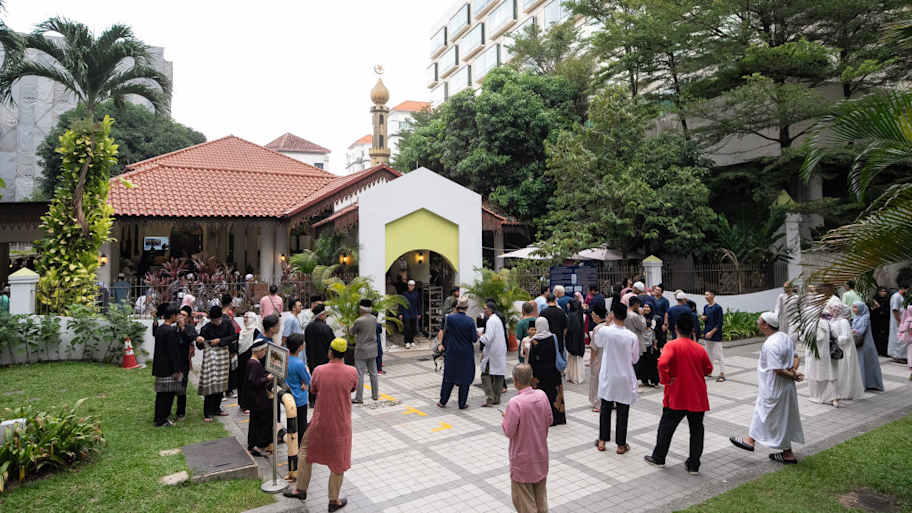
Asia is home to several of the world’s most religiously diverse countries. Singapore tops the list, with a religious diversity score of 9.3 out of 10. Buddhism is the largest religion, accounting for 31% of the population, followed by the religiously unaffiliated at 20%, Christians at 19%, Muslims at 16%, Hindus at 5%, and other religions at 9%.
Suriname, the only country from the Americas on the list, ranks second. More than half of its population is Christian, with significant Muslim and Hindu communities. Taiwan and South Korea hold third and fourth places, respectively, while Mauritius, an island nation in the Indian Ocean, takes fifth place.
Notably, the religiously unaffiliated play a significant role in some of the top 10 most diverse countries. South Korea, for example, has 48% of its population identifying as religiously unaffiliated, which is higher than any other religious group. Similarly, Australia and France have large numbers of religiously unaffiliated individuals, nearly matching the size of their Christian populations.
Least Religious Diversity in the Middle East
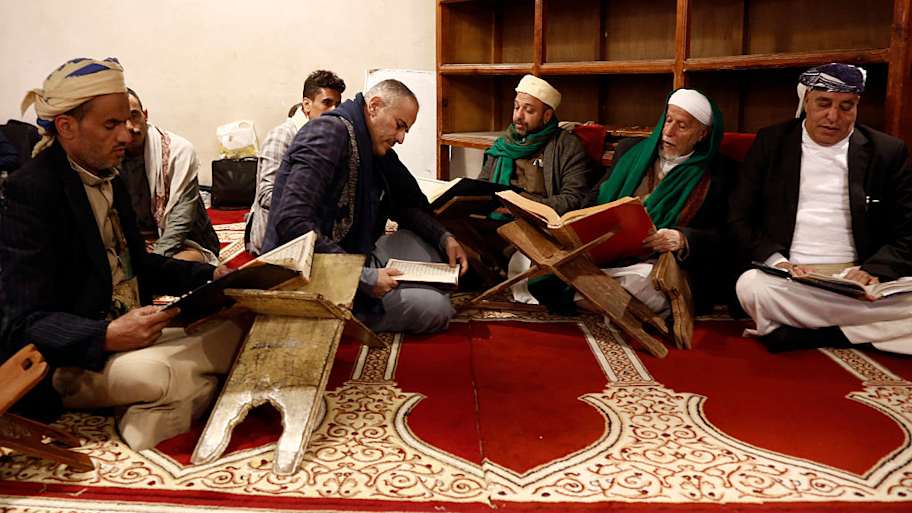
In contrast, the Middle East is home to some of the least religiously diverse countries. Three of the top five least diverse nations are located in this region: Yemen, Afghanistan, and Iran. Two African countries, Somalia and Morocco, also make the list. All five countries have predominantly Muslim populations, with at least 99.7% of their citizens identifying as Muslim.
Islam dominates the list of least religiously diverse countries, with eight of the top 10 having at least 99% of their populations identifying as Muslim. Only two countries in the top 10—Moldova and Timor-Leste—have large Christian populations, each with 99.5% of their citizens identifying as Christian.
How the United States Compares
The United States scores 5.8 out of 10 on the Pew Research Center's religious diversity scale, making it one of the most diverse among the 10 most populous countries. Approximately 64% of the population identifies as Christian, while 30% are religiously unaffiliated. The remaining 6% includes Muslims, Hindus, Buddhists, Jews, and other faiths.
Between 2010 and 2020, religious diversity in the U.S. increased significantly. While the overall levels didn’t change much, the country moved from a "moderate" to a "high" diversity level. This shift was driven by a rise in the number of religiously unaffiliated individuals and a decline in the percentage of Christians. In 2010, 78% of Americans identified as Christian, compared to 16% who were unaffiliated. By 2020, these numbers had shifted to 64% and 30%, respectively.
Additional Insights
Understanding the diversity of religious beliefs around the world offers valuable insights into cultural dynamics and societal structures. As globalization continues to connect people across the globe, the interplay between religion, culture, and identity remains a critical area of study.
Other related topics include the most polite countries in the world, the best countries for wildlife observation, and the most beautiful countries in 2026. Each of these areas reflects the complex relationship between human behavior, environmental factors, and cultural values.

Post a Comment for "Explore the World's Most and Least Religiously Diverse Nations"
Post a Comment