
Eurovision Fans Protest Israel's Final Spot as Delta Goodrem and Finland Vie for Victory
Eurovision 2024: Protests and Divisions Over Israel's Participation
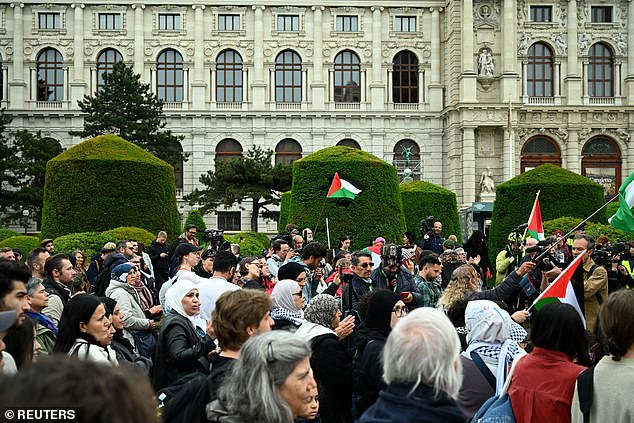
Eurovision fans in Vienna have taken to the streets to protest Israel’s participation in this year’s contest, which is set to conclude tonight. The event marks its 70th anniversary, but the controversy surrounding Israel’s inclusion has overshadowed the celebration of music and unity.
Vienna, the host city, has been adorned with heart-shaped decorations and the contest’s theme of “United by Music” as 35 countries compete for Europe’s musical crown. However, tensions remain high, with several nations choosing to boycott the competition. Spain, Ireland, the Netherlands, Slovenia, and Iceland have all decided not to participate, citing concerns over Israel’s actions in the region.
Pro-Palestine groups organized an outdoor concert on Friday under the slogan "No Stage for Genocide," and further demonstrations are planned ahead of tonight’s final. Congolese-Austrian artist Patrick Bongola, one of the organizers, criticized the decision to include Israel in the event, stating that it is an affront to those who believe in humanity, love, and togetherness.
Jamil Sawalmeh, Country Director for ActionAid Palestine, emphasized the need for European governments to uphold their values when it comes to the Palestinian people. She highlighted the ongoing humanitarian crisis in Gaza, where Palestinians continue to face bombardment, displacement, and suffering.
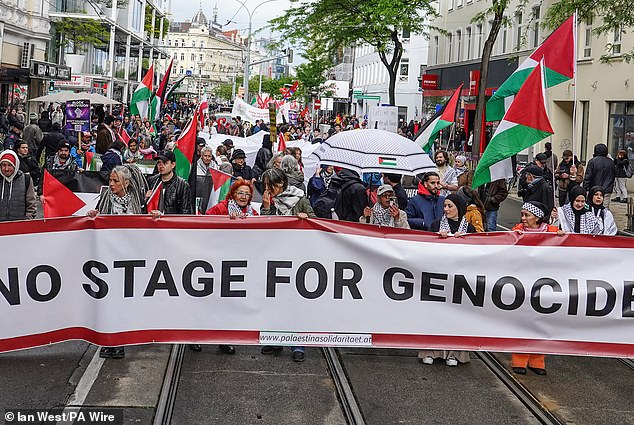
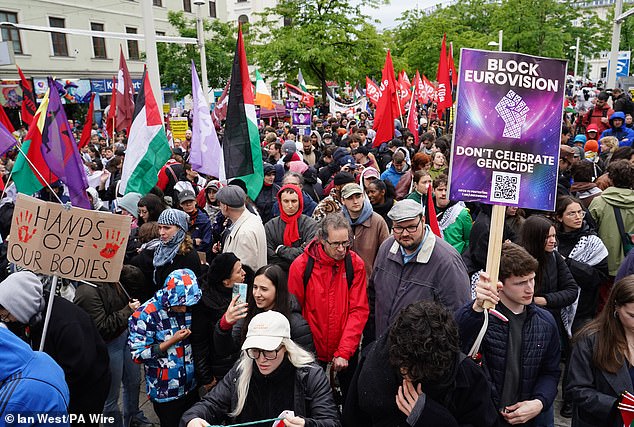
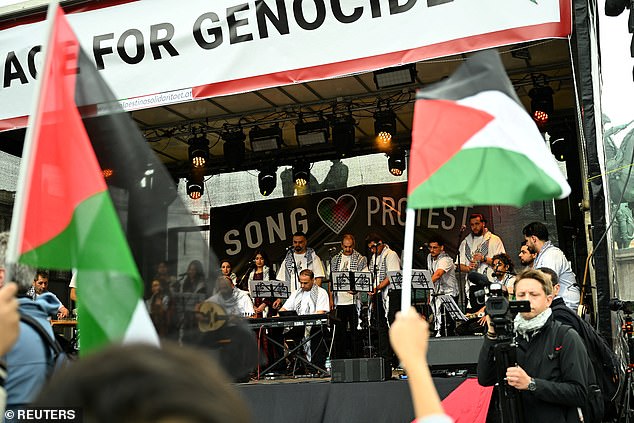
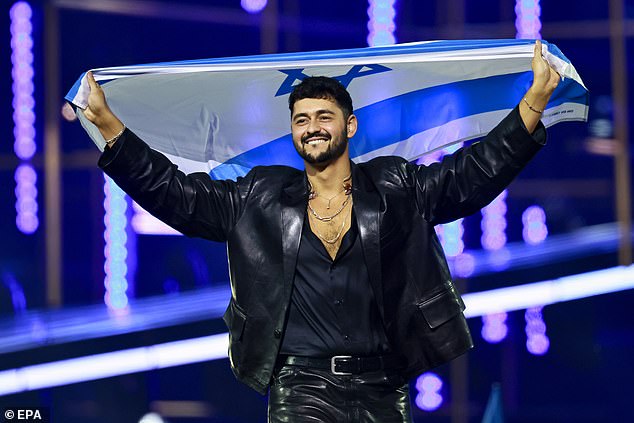
The protests in Vienna have been smaller compared to previous years, such as the 2024 contest in Malmö, Sweden, and last year’s event in Basel, Switzerland. However, four protesters were ejected during Tuesday’s semifinal after attempting to interrupt Israeli competitor Noam Bettan’s performance. He will be performing the ballad "Michelle" in tonight’s final.
Like last year’s Israeli contestant, Yuval Raphael, Bettan has had to perform while facing booing from some audience members. This is the third consecutive year that calls for Israel’s exclusion have dominated the Eurovision conversation, fueled by its conflicts in Gaza and elsewhere.
Spain announced its boycott in December after the European Broadcasting Union (EBU) confirmed Israel’s participation. Since then, other countries have followed suit, including Ireland, Slovenia, the Netherlands, and Iceland. Some Spanish fans support the decision, even though it is bittersweet for many.
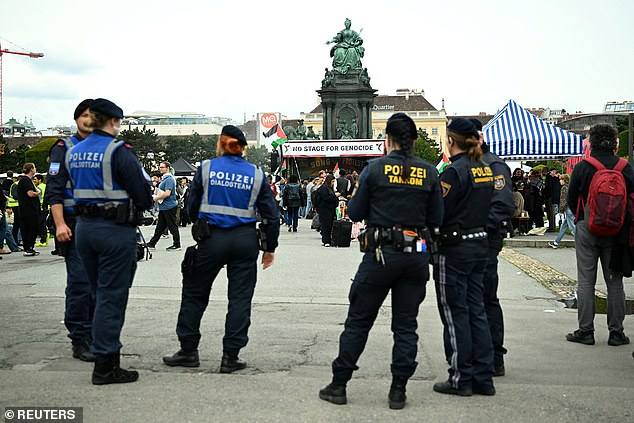
Spain’s national broadcaster, RTVE, has repeatedly expressed disapproval of Israel’s participation. In last year’s semifinals, RTVE commentators mentioned Palestinian casualties while introducing Israel’s singer. Before airing the final, the network broadcast a message of "Peace and Justice for Palestine" on a black background.
As the Eurovision finals take place in Vienna, RTVE will air a tribute to its musical history, featuring performances by Tony Grox and Lucycalys—musicians who would have represented Spain. Ireland’s national broadcaster will show a Eurovision-themed episode of the sitcom Father Ted, while Slovenian viewers will see an episode of a 10-part program about Palestinians.
Despite the boycotts, fans can still watch Eurovision on the EBU’s YouTube channel. However, the absence of a performer or commentator from their own country has made the experience less passionate for some.
The boycotts have also had financial implications for Eurovision, which relies heavily on funding from participating broadcasters. Public broadcasters, already under pressure due to government funding cuts and competition from social media, are feeling the impact.
Long known for its friendly rivalries, Eurovision has struggled to separate pop music from politics in recent years. Russia was expelled in 2022 following its invasion of Ukraine, and tensions have risen again since Hamas’ October 7, 2023, attack on Israel. The conflict has led to pro-Palestinian protests both outside and inside venues, prompting organizers to crack down on political flag-waving.
Several performers and countries have called for Israel’s exclusion, which has competed in Eurovision since 1973. The 2024 contest in Malmö and last year’s event in Basel saw similar protests, with calls for Israel to be expelled over its conduct in Gaza and allegations of rule-breaking marketing efforts.
In response to vote-rigging claims, the EBU has tightened voting rules, reducing the number of votes per person to 10 and implementing stricter safeguards against suspicious activity. Israel received 83% of its points from the public in 2023, finishing second overall. Austria’s winner, "Wasted Love," relied more on jury votes to secure victory.
Posts from Israel’s foreign ministry account, dated on the day of last year’s semi-final, encouraged people to vote for Israel’s contestant, suggesting they could vote up to 20 times. Eurovision Song Contest Director Martin Green acknowledged disproportionate marketing efforts but did not directly reference the posts.
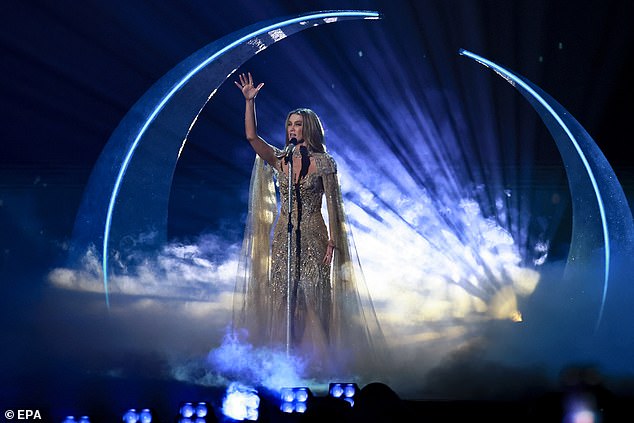
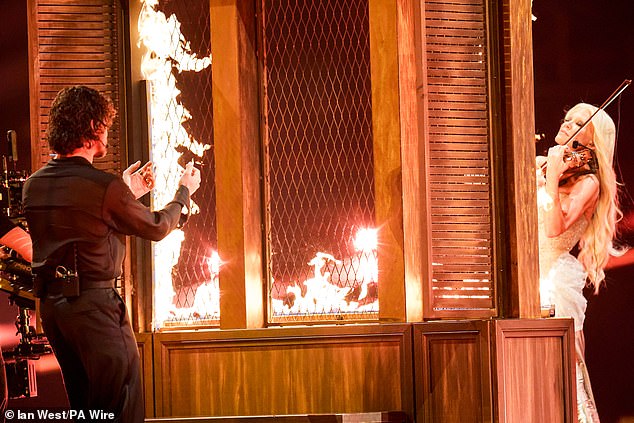
Despite the protests, contestants from 25 countries are preparing to take the stage at the Wiener Stadthalle in Vienna. Finland is the favorite in betting odds with "Liekinheitin," a fiery duet between Pete Parkkonen and Linda Lampenius. Australia, which has participated since 2015, is also a wildcard with Delta Goodrem’s ballad "Eclipse."

Post a Comment for "Eurovision Fans Protest Israel's Final Spot as Delta Goodrem and Finland Vie for Victory"
Post a Comment