
Do Hybrids and EVs Truly Excel in City MPG?
For decades, when considering a vehicle's fuel economy, both in terms of EPA ratings and real-world performance, we were conditioned to expect highway numbers to exceed those in the city, often substantially so. This was especially true for traditional gasoline-powered vehicles. An internal combustion engine is more efficient at a steady highway speed and constant RPM, delivering much better fuel economy than when it's constantly accelerating and then slowing down. In simple terms, each time you come to a stop in city driving, you essentially waste all the energy used to get up to speed.
However, with the rise of hybrid and electric vehicles (EVs), these ratings have started to flip. Electrified vehicles often show better efficiency in city driving than on the highway. Depending on your daily commute, this can be a significant money saver. But is this always the case in the real world? Generally, yes, but the lines can become blurry quickly.
The reason hybrids and EVs excel in city driving lies in battery regeneration. Whether it's a traditional hybrid, a plug-in hybrid, or a full EV, all of them use some form of regenerative braking. This process captures the kinetic energy generated when slowing down and feeds it back into the battery. This happens both by lifting off the throttle and applying the friction brakes when slowing or stopping.
In stop-and-go driving, this flow of energy back into the battery improves efficiency on pure EVs and allows hybrids to run longer without using their gasoline engines. Additionally, EVs and hybrids don't need to run an engine while stopped, which further boosts efficiency. While many gas cars now have engine stop/start systems, this has raised questions about engine longevity.
When it comes to real-world efficiency, EVs and hybrids typically do better in the city than on the highway, though the differences aren't always as stark as they seem. According to Car & Driver's extensive testing, some EVs deliver only a fraction of their EPA-rated range at sustained highway speeds, while others meet or even exceed it.
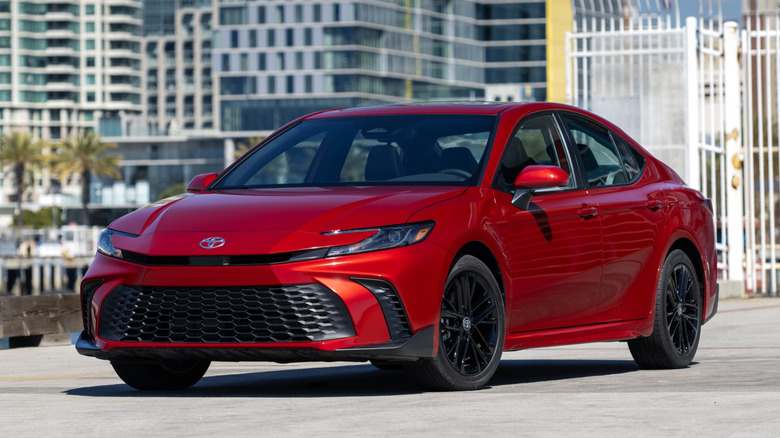
Hybrids, on the other hand, often perform well in both stop-and-go city driving and on long highway road trips. For example, a new Toyota Camry SE hybrid is EPA rated at 48 MPG in the city and 47 MPG on the highway. This means there should be little difference in fuel economy whether you're driving around the city or cruising on the highway, according to the EPA's testing methods.
Not all driving scenarios are equal. Whether you're driving a hybrid or an EV, the faster you go on the highway, the less efficient you'll be. It's simply a matter of physics—more speed requires more energy, and long highway drives don't offer many opportunities for regenerative braking. This drop-off in highway range, along with the issue of sparsely placed charging stations, is a major cause of EV range anxiety and one of the main reasons drivers hesitate to use their EVs for long-distance road trips.
On the flip side, hybrid owners often report that their efficiency numbers aren't great on very short drives where the gasoline engine doesn't have time to warm up. For instance, if you're driving a Camry SE for a short one-mile trip to the coffee shop, you might be running the gasoline engine more than usual. As a result, your actual MPG for that trip could be far lower than the EPA's 48 MPG rating.
Ultimately, real-world experience and testing support the idea that hybrids and EVs are generally more efficient in city driving than on the highway. However, your mileage may vary depending on factors such as your specific vehicle, weather conditions, trip length, and driving style. These elements can significantly influence just how big the difference in efficiency is between city and highway driving.

Post a Comment for "Do Hybrids and EVs Truly Excel in City MPG?"
Post a Comment