
Churchill: Not Guilty by Her Father's Sins
The Protests Against Leila Khatami
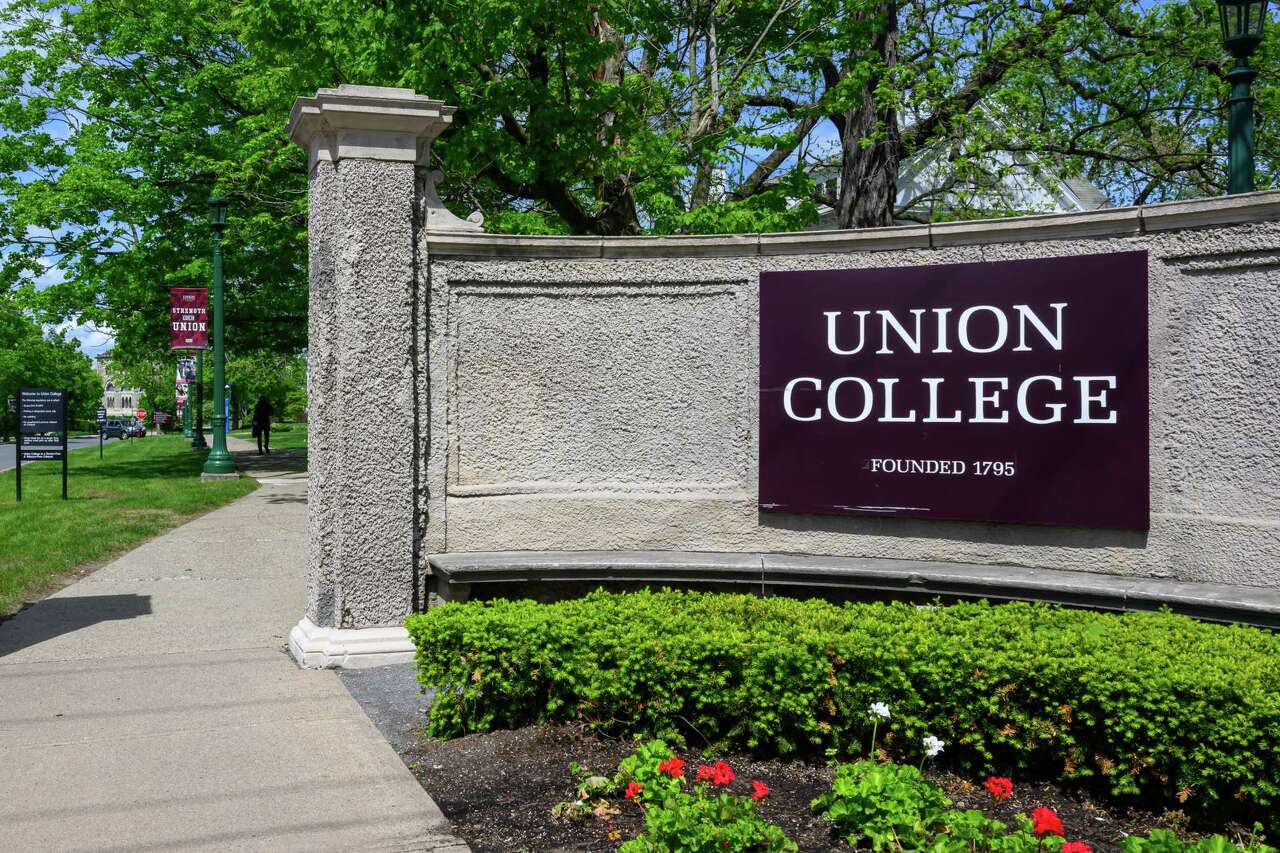
On a recent afternoon, a small group of protesters gathered outside Union College to demand that the institution investigate the hiring of one of its math professors—Leila Khatami. The reason for the protest was not based on any wrongdoing by Khatami herself, but rather on her father's political background. Mohammad Khatami, her father, was Iran's president from 1997 to 2005, and his association with what some consider an authoritarian regime has led to accusations against his daughter.
Khatami, who has been at Union College since 2011, is not accused of writing anything offensive on social media, insulting a student, or being a poor teacher. Instead, she is being targeted simply because of her familial ties. The protesters, part of the Alliance Against the Islamic Regime of Iran Apologists, argue that individuals connected to authoritarian power structures should not be insulated from public scrutiny.
The Argument for Scrutiny
Lawdan Bazargan, the leader of the alliance, explained that the issue is not about denying Khatami’s humanity or professional accomplishments. Rather, it is about whether individuals linked to authoritarian systems should be allowed to work in academia without facing scrutiny. Bazargan claims that children of regime insiders often benefit from opportunities that are denied to ordinary Iranians, such as access to education and international mobility.
This argument centers around the idea of privilege. However, while it may seem fair to question the advantages some individuals have, the problem arises when these questions are used to justify attacks on someone's character or employment. Khatami's background is not her fault, and she is not the only professor with a privileged upbringing. Should all such individuals be scrutinized or even purged?
The Irony of Guilt by Association
The irony here is that applying guilt to family members of the accused is a hallmark of totalitarian regimes. Whether they realize it or not, Bazargan and others seem to be using a similar approach. Bazargan, an Iranian immigrant living near Los Angeles, argues that Khatami’s silence about her father and Iranian public affairs is equivalent to complicity. She also suggests that university officials are naive for not subjecting regime-linked employees to special scrutiny.
However, Union College President Elizabeth Kiss refused to meet with the protesters. In a letter to Bazargan, she emphasized that Khatami has done nothing wrong and is being victimized for familial associations over which she had no control. Kiss also shared her own personal history as the daughter of Hungarian political prisoners, highlighting the importance of judging people based on their own actions, not those of their parents.
The Role of Academia
Kiss described Khatami as a dedicated campus mentor known for kindness and integrity. She pointed out that Khatami's field of expertise is commutative algebra, a mathematical discipline that does not inherently tie her to political discussions about her father. If Khatami were a professor of Middle Eastern Studies, there might be more justification for scrutiny. But as a mathematics professor, her work is unrelated to political activism.
Attacks on Khatami and other professors with familial links to the Iranian government have intensified as the U.S. has gone to war against Iran. Media outlets like the New York Post have published articles questioning the presence of such individuals in academic positions, suggesting that they could pose a threat to U.S. values. However, these stories do not specify what those values are, nor do they provide evidence of any wrongdoing by Khatami.
Support from the Iranian Diaspora
Despite the protests, Khatami has received support from members of the Iranian diaspora who know and admire her. Kiss mentioned this in her letter, emphasizing that the college stands firm in its support of its cherished colleague. The situation raises important questions about how we judge individuals based on their family backgrounds and whether such judgments are fair or just.
In the end, the debate over Khatami highlights the complex relationship between personal responsibility, familial ties, and the role of academia in society. While it is reasonable to question the privileges of certain individuals, it is equally important to ensure that these questions do not lead to unjustified attacks on someone’s character or career.

Post a Comment for "Churchill: Not Guilty by Her Father's Sins"
Post a Comment