
Asia-Pacific Banks Boost Provisions Amid Rising Credit Risk from Iran Conflict
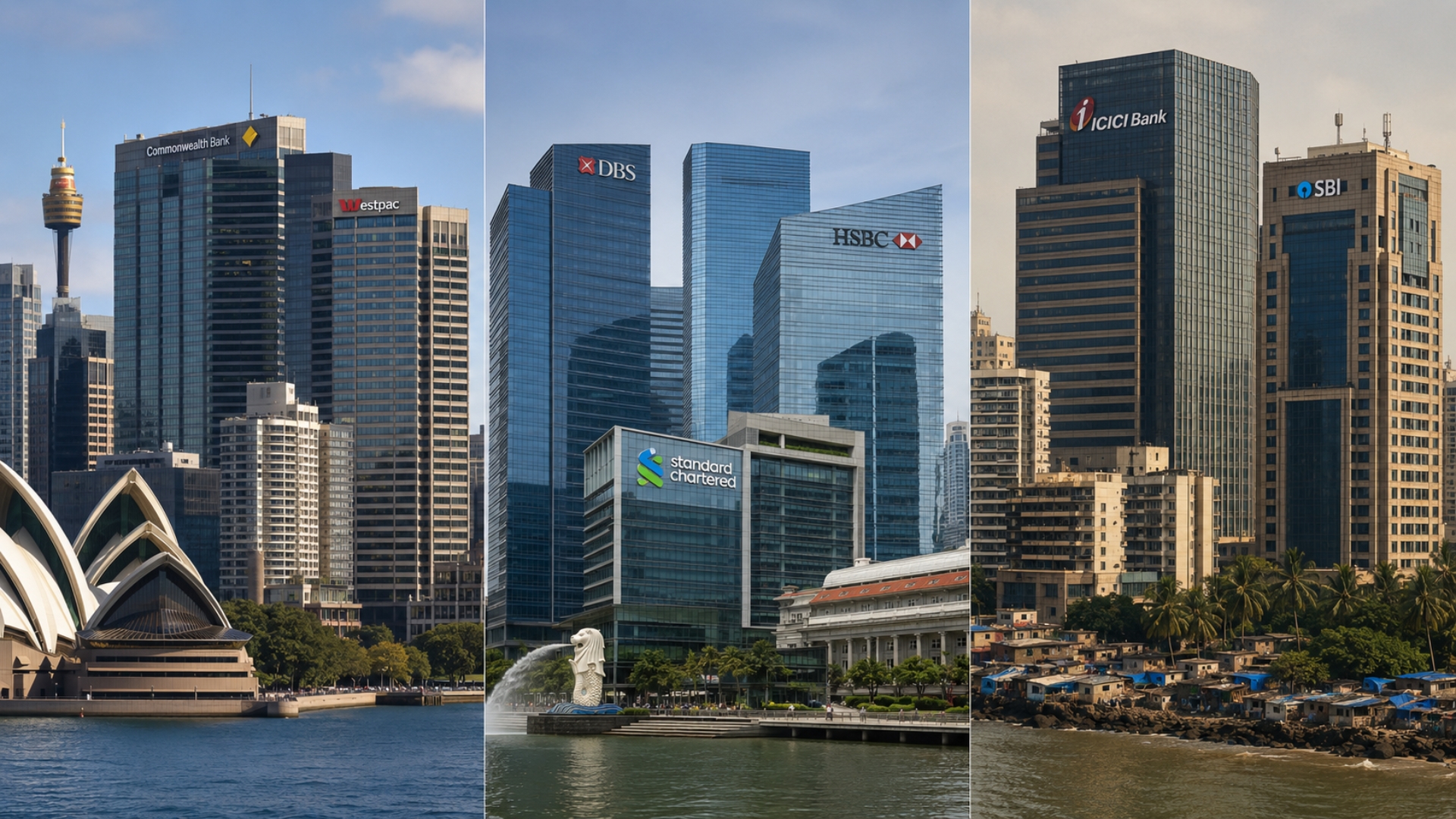
Banks Are Building Cushions Against Potential Credit Risks
Asia Pacific banks are increasing their reserves to handle potential credit issues as the ongoing conflict in Iran continues to impact regional economies. Reports indicate that financial institutions in countries such as Australia, Singapore, and India have identified possible credit losses amounting to hundreds of millions of dollars in their March-quarter results. These losses are attributed to the indirect effects of the war rather than direct exposure to the Middle East.
This situation is significant because the risks are stemming from secondary impacts rather than direct involvement in the conflict. Financial institutions are now facing challenges such as prolonged high oil prices, supply chain disruptions, trade obstacles, rising interest rates, and weaker corporate balance sheets.
Australia Faces the Strongest Market Reaction
Australia has experienced the most severe market response. According to reports, the top four Australian banks have set aside a total of A$957 million for war-related risks. Commonwealth Bank of Australia, for instance, saw its market value drop by nearly $22 billion after increasing its risk buffers related to the Middle East conflict.
Other major Australian banks have also raised provisions by A$757 million over the past two weeks to cover future potential bad debts linked to the war. Since the conflict began on February 28, National Australia Bank shares have declined by 21.2%, while Westpac shares have fallen by 12.4%, marking the steepest drops among major Asia Pacific lenders.
Singapore and India Show Growing Caution
The cautious approach is spreading throughout the region. In Singapore, OCBC has set aside S$216 million in provisions, while HSBC and Standard Chartered recorded charges of $300 million and $190 million, respectively, during the March quarter. UOB mentioned that its direct exposure to the Middle East is minimal but warned that second-order effects could affect small and medium-sized business customers.
In India, several lenders, including HDFC Bank, Axis Bank, and Federal Bank, have also created provision buffers. So far, these banks have not reported any decline in asset quality, indicating that they are preparing for potential risks rather than reacting to an immediate credit event. This conclusion is based on the observation that provisions are rising without a current decline in asset quality.
The Risk Is Increasing Without Immediate Defaults
Analysts do not yet see a wave of credit defaults, but they are cautioning that prolonged energy disruption could turn precautionary provisioning into actual losses. Gary Ng of Natixis noted that more Asian banks have increased provisions and forward-looking overlays because even if the war ends soon, elevated energy prices and sustained interest rates could affect repayment capacity and credit demand.
Current provisioning levels are still significantly lower than the buffers built during the COVID shock. For example, the top four Australian banks' war-related provisions are about 80% below their 2020 buffers. Eight large Asian banks outside China and Japan have provisions around $2.8 billion, which is 70% lower than previous levels. This suggests that the sector is being cautious but not yet anticipating a full-blown credit crisis.
What Comes Next?
The next test will come with the June-quarter results if oil prices remain high and regional growth weakens further. The Asian Development Bank has lowered its growth forecast for developing Asia and the Pacific to 4.7% this year and 4.8% in 2027, down from 5.1% for both years previously. Analysts suggest that actual credit losses could increase depending on how long the war lasts and whether energy disruption affects domestic sectors more directly.
For now, the key takeaway is that Asia Pacific banks are not yet facing a default shock, but they are preparing for one. The longer the Iran war keeps oil prices high and economic prospects uncertain, the more likely it is that today’s precautionary provisions will become tomorrow’s real credit losses.

Post a Comment for "Asia-Pacific Banks Boost Provisions Amid Rising Credit Risk from Iran Conflict"
Post a Comment