
Air Force Reverses Decision, Will Purchase 7 E-7A Wedgetail Jets After Cancellation Attempt
The U.S. Air Force Reverses Course on the E-7A Wedgetail Program
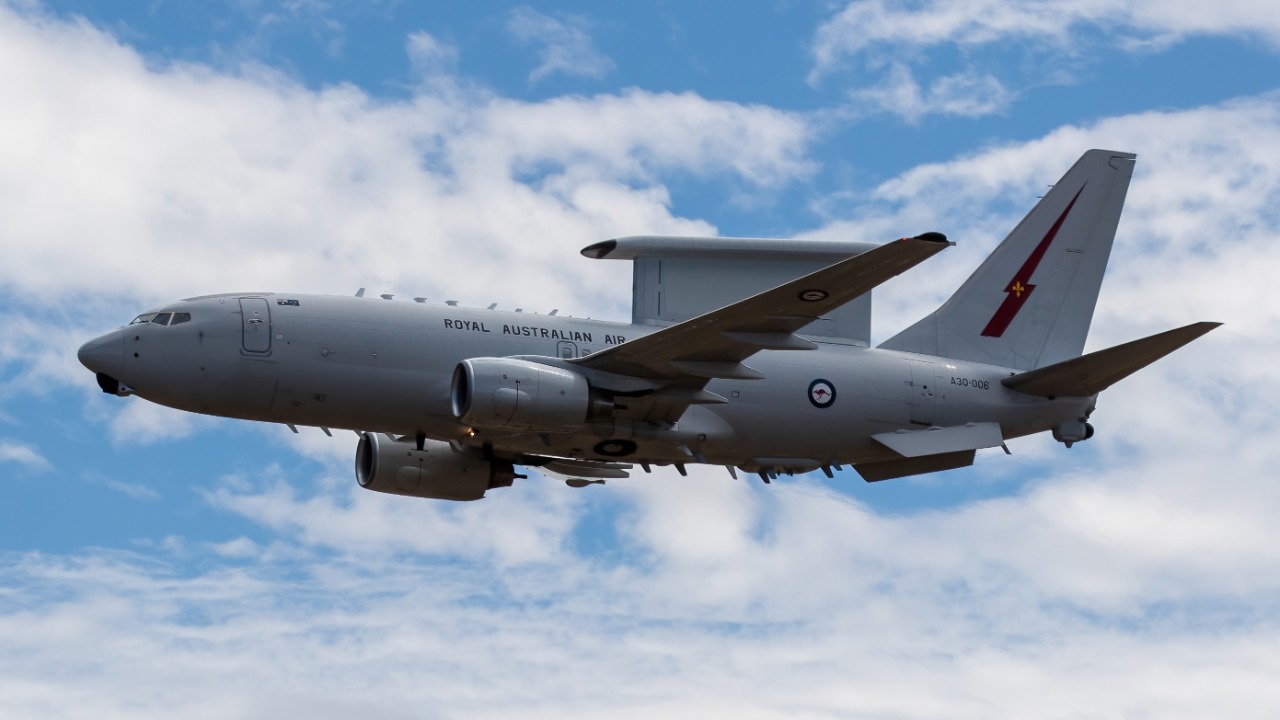
Less than a year after attempting to cancel its next-generation airborne surveillance plane, the U.S. Air Force announced on April 30, 2026, that it will purchase at least seven E-7A Wedgetail aircraft. This decision marks a significant shift in the program’s trajectory and ensures the replacement of the aging E-3 Sentry fleet, which has been in service since 1977.
The Secretary of the Air Force, Troy E. Meink, informed the House Appropriations Defense Subcommittee that the service plans to acquire five production E-7As in addition to two rapid prototypes already under contract with Boeing. This move comes after months of congressional pressure, substantial financial commitments, and growing concerns about the Air Force’s ability to maintain an operational airborne early warning and control (AEW&C) platform as the E-3 fleet becomes increasingly obsolete.
Why the Wedgetail Matters
The E-7A Wedgetail is built on a Boeing 737 airframe and features a powerful electronically scanned radar capable of tracking hundreds of airborne and surface targets simultaneously. Its primary role is battle management—orbiting at high altitude, scanning vast areas of airspace, and directing friendly fighters and strike aircraft toward threats. Australia’s Royal Australian Air Force has operated its own version of the Wedgetail since 2012, and NATO and the United Kingdom have also ordered similar platforms.
In contrast, the E-3 Sentry, which the Wedgetail is replacing, flies on a Boeing 707 airframe that has become increasingly expensive to maintain. Spare parts are scarce, flight hours have been restricted, and the rotating radar dome atop the E-3 is significantly outdated compared to modern electronically scanned arrays. For aircrews and mission commanders, this gap represents a period of real operational risk. Without a reliable AEW&C platform, fighter pilots lose critical wide-area surveillance, and ground commanders lose a key node for coordinating complex strike packages.
The Contract Trail
Before Meink’s public testimony, the Air Force had already committed significant funds to the Wedgetail program. On March 12, 2026, the service exercised a $2.335 billion option on contract FA8730-23-C-0025 for the E-7A Rapid Prototype Airborne Mission Segment. That same day, a separate $99.275 million modification funded work on the aircraft’s radar integration. Together, these actions committed over $2.4 billion in new obligations, signaling that the Air Force had moved past deliberation and into execution.
Congress played a crucial role in this decision. The committee report accompanying the fiscal year 2026 defense appropriations bill, H. Rept. 119-162, included explicit language supporting E-7 Wedgetail development with dedicated funding. This legislative backing created a floor beneath the program, making it procedurally and politically difficult for the Air Force to abandon the project.
What Drove the Reversal?
The Air Force has not publicly released the internal analysis behind its previous attempt to cancel the E-7A, so the exact reasoning remains unclear. At the time, officials were exploring alternatives such as unmanned platforms and space-based sensors. However, Congress was skeptical about whether unproven concepts could fill the gap left by the retiring E-3 Sentry, especially as China's capabilities continue to grow.
Lawmakers on the defense appropriations and armed services committees questioned whether these alternatives could be relied upon. The language in H. Rept. 119-162 reflected this skepticism, showing that Congress was unwilling to let the Air Force abandon a known solution for untested concepts.
Meink’s testimony confirmed the five-plus-two buy figure, but without a full transcript or written statement, the precise wording and context remain unknown. Whether his remarks reflect a genuine shift in the Air Force’s thinking or an acknowledgment of congressional decisions is still unclear.
What Remains Unresolved
The seven-aircraft figure should be seen as a minimum, not a maximum. While Meink stated the Air Force would buy five production jets beyond two prototypes, he did not specify if more orders could follow. Key details such as per-unit costs, delivery timelines, and retirement schedules for the E-3 Sentries remain undisclosed.
Industrial capacity is another open question. Boeing must integrate Wedgetail production into an already busy portfolio that includes commercial 737 deliveries and military derivatives for multiple allies. Without a clear objective fleet size, it is hard to determine if the program will scale into a major production line or remain small.
There is also the broader budget tension. Every dollar spent on the E-7A is a dollar not allocated to unmanned or space-based sensing programs. How the Air Force balances a crewed AEW&C fleet with distributed sensing architectures will shape its force structure for decades.
A Program That Is Now Hard to Kill
For defense industry observers and Boeing stakeholders, the practical reality is clear: the E-7A Wedgetail now has both legislative backing and billions in executed contracts. Walking away again would require the Air Force to justify abandoning money already spent and congressional intent already written into law. This combination of sunk costs and political commitment makes the seven-aircraft minimum durable, even as the full production plan remains uncertain.
This pattern is familiar in military procurement. When Congress funds a program the services have tried to trim, it can preserve capabilities deemed strategically essential. It can also constrain the Pentagon’s flexibility to shift resources toward emerging technologies. The Wedgetail reversal is the latest example of this ongoing tug-of-war. Until future budget cycles reveal whether the Air Force expands, holds, or quietly erodes the seven-jet minimum, the surest guide to the program’s trajectory is the money already on contract and the appropriations language already in the books.

Post a Comment for "Air Force Reverses Decision, Will Purchase 7 E-7A Wedgetail Jets After Cancellation Attempt"
Post a Comment