
Air Force Resumes E-7A Wedgetail Purchase After Cancellation Backtrack
The E-7A Wedgetail Program: A Last-Minute Rescue
Less than a year after the Pentagon attempted to terminate the E-7A Wedgetail program, the Air Force has made a dramatic shift in its stance. The service has committed to purchasing at least seven of the Boeing-built surveillance jets. This decision came during a budget hearing on April 30, 2026, when Air Force Secretary Troy E. Meink announced plans to acquire five production aircraft, in addition to two prototypes already under contract.
This reversal was largely due to the influence of Congress. Lawmakers included a $900 million funding increase for the E-7A in the fiscal year 2026 defense spending bill, effectively countering the Pentagon’s cancellation and ensuring the production line would remain active.
Why the Wedgetail Matters
The E-7A is intended to replace the E-3 Sentry, the Air Force's primary airborne early warning and control aircraft since the late 1970s. The E-3 uses a rotating radar dome mounted on a Boeing 707 airframe to detect incoming threats and coordinate friendly aircraft during combat. After nearly five decades of service, the fleet faces challenges such as increasing maintenance costs, declining availability rates, and outdated electronics.
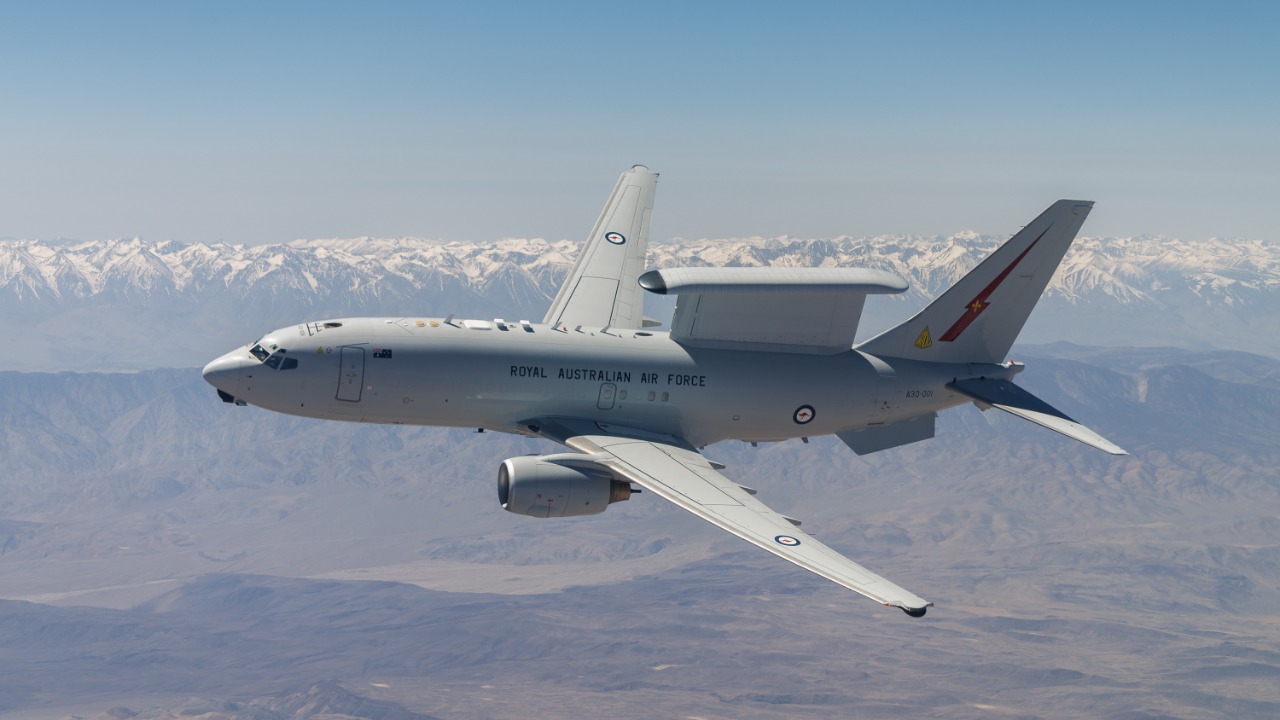
Built on the more modern Boeing 737 platform, the Wedgetail features a fixed multi-role electronically scanned array radar capable of tracking both airborne and maritime targets simultaneously. It has been the backbone of airborne command and control for the Royal Australian Air Force since 2009. The United Kingdom has also ordered its own fleet, though deliveries have not yet begun. A U.S. cancellation would have left American forces operating a 1970s-era platform while their allies used its replacement, creating a gap in joint operations and NATO interoperability.
How the Program Nearly Died
Initially, the Pentagon envisioned a fleet of 26 E-7A aircraft, a number that appeared in earlier Air Force budget documents and was widely cited by defense analysts. However, during last year’s budget deliberations, Pentagon leadership sought to eliminate the program entirely, citing fiscal pressure and a preference for investing in newer, potentially more distributed sensor technologies. The specifics of this alternative approach were never fully detailed publicly, leading to skepticism among lawmakers and analysts about whether a viable replacement was ready.
Congress pushed back strongly. The $900 million line item in the FY26 defense bill represents one of the largest single-program funding increases in the spending package, signaling bipartisan concern about the state of U.S. airborne early warning capacity. By directly inserting the money into the bill, appropriators ensured the Air Force could not defer the program into a future budget cycle.
Seven Aircraft Is a Floor, Not a Ceiling
Meink’s confirmation of a seven-jet minimum keeps the Wedgetail production line open and allows the Air Force to establish initial training, conduct operational testing, and maintain a small deployable force. However, seven is far less than the originally envisioned 26, raising questions about how the service will cover its airborne command-and-control mission across multiple regions.
No public document has explained why the Air Force chose seven over a larger number. The figure may reflect what $900 million can realistically buy. Spreading the funds across five new jets implies a rough unit cost of around $180 million, though this estimate is speculative without official breakdowns. It does not account for spare parts, training systems, ground infrastructure, or modifications to the two prototypes. Whether the Pentagon sees seven as a final fleet size or as the first step in a larger purchase remains unclear.
For Boeing, the commitment offers near-term stability. The company builds the E-7A at its defense facilities and has been marketing the aircraft to international customers. A confirmed U.S. order, even a modest one, strengthens Boeing’s pitch to potential buyers and helps sustain the supplier base that supports the 737-derived military platform.
What to Watch Next
Several key pieces of information are still missing as of late May 2026. The full transcript of Meink’s testimony has not yet appeared on the House Appropriations Committee website, so the precise language he used regarding delivery timelines, per-unit costs, and any conditions attached to the buy cannot be independently verified. When this record is published, it should clarify whether the five additional jets are locked into the current program plan or contingent on future milestones.
Contract details remain opaque. While the two prototype aircraft are under contract with Boeing, award specifics, production schedules, and lot structures for the five new jets have not been disclosed. Defense acquisitions of this scale typically involve extended negotiations over configuration, sustainment, and long-lead materials, and none of these terms are public yet.
The full conference report text, rather than just the summary, may contain additional legislative language directing the Air Force to maintain a minimum fleet size, accelerate E-3 retirements, or report back to Congress on long-range Wedgetail requirements. These provisions, if they exist, would signal whether lawmakers view seven aircraft as a temporary fix or the foundation for a larger fleet.
A Narrow Reprieve with Broader Stakes
The reversal keeps the Wedgetail alive, but it does not resolve the underlying tension between the Pentagon’s interest in next-generation sensor networks and the immediate need for a working airborne early warning fleet. Seven E-7As would provide the Air Force with a modern, allied-compatible capability it currently lacks, yet the number falls well short of what combatant commanders have said they need to maintain adequate coverage across multiple theaters.
How Congress and the Pentagon negotiate this gap in future budget cycles will determine whether this decision marks a modest compromise or the beginning of rebuilding a full-scale airborne command-and-control force. For now, the Wedgetail has survived its closest brush with cancellation, and the production line that builds it will stay warm.

Post a Comment for "Air Force Resumes E-7A Wedgetail Purchase After Cancellation Backtrack"
Post a Comment