
'I Cut the Garbage': O'Leary's Top Two Crypto Bets That Give Him All the Exposure He Needs
The Debate Over Altcoins: Are They Worth the Risk?
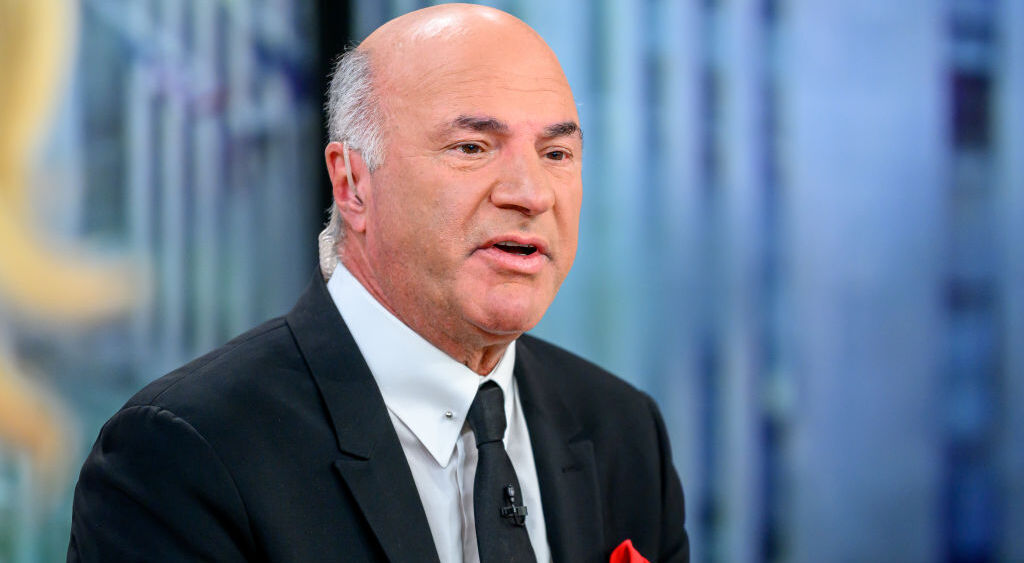
Kevin O'Leary, a well-known investor from Shark Tank, has made headlines with his strong opinions on altcoins. In an interview on The Breakdown Podcast, he famously referred to altcoins as "poo poo" and claimed they have "no future." This bold statement came despite being interviewed by Blockworks, a company that covers crypto markets. O'Leary is known for his straightforward approach, and his comments reflect his belief in Bitcoin and Ethereum as the only viable options in the cryptocurrency space.
Bitcoin's Dominance and the Role of Altcoins
O'Leary's focus on Bitcoin and Ethereum comes at a time when the crypto market is experiencing shifting sentiments. Since the sharp selloff in February, Bitcoin has remained below the $90,000 mark, far from its all-time high of over $120,000 per coin. When Bitcoin drops, the entire crypto market tends to follow. This makes Bitcoin the bellwether for the broader market, with other cryptocurrencies collectively referred to as "altcoins."
In 2025, O'Leary sold 26 altcoins after the market collapse, keeping only Bitcoin, USD (a stablecoin), and Ethereum. He argues that the other coins are "screwed" due to a lack of marketing and no clear reason to own them. But is this assessment fair?
The Size and Growth of the Altcoin Market
Despite O'Leary’s skepticism, the altcoin market remains significant. According to CoinMarketCap, the market size exceeds $700 billion, excluding Ethereum. There are no signs of the market slowing down, and short-term interest is expected to grow. Since February, the CMC Fear and Greed Index has moved from "extreme fear" to "greed," suggesting a potential recovery for Bitcoin and the broader crypto market.
However, the question remains: are investors actually profiting from owning altcoins? The data suggests otherwise.
The Year of Dead Coins
O'Leary claims that altcoins that collapsed in 2025 never came back. This is supported by CoinGecko’s analysis, which shows that over 50% of coins tracked from 2021 through 2025 have failed, with 86 failures occurring in 2025 alone. Many of these failures can be attributed to platforms like pump.fun, which facilitate the creation of meme coins such as Peanut, Fatcoin, and Mother Iggy.
While it would be unfair to blame all altcoin failures on meme-coin generators, the data shows that most coins don't last long. A significant portion of crypto coins that existed in 2014 are now abandoned. Some failed because they didn’t gain traction, while others were victims of "rug pulls," where developers abandon projects after collecting funds.
The Risks of Altcoins
The performance of altcoins is often compared to penny stocks—speculative investments in companies trading for less than $5 per share. According to Sahm Financial Academy, 60% of penny stocks approach zero value within three years. This suggests that altcoins, like penny stocks, are high-risk ventures.
O'Leary emphasizes that liquidity is concentrated in Bitcoin and Ethereum, which are easier to trade and tend to recover after downturns. These assets are generally considered the "safest" in the crypto space. However, it's too early to conclude that the rest of the crypto market has no future. Some altcoins do break the mold and offer real utility.
Regulatory Changes and the Future of Altcoins
Recent policy changes have made it easier for investors to distinguish between legitimate and fraudulent projects. Over a dozen assets have been classified as "digital commodities" by the SEC and CFTC. To qualify as a digital commodity, an asset must derive value from an underlying system rather than the expectation of profit, according to Fidelity.
Solana and Chainlink are examples of such assets. Solana is a smart contract platform, while Chainlink secures on-chain transactions. Both are among the few that have been classified as digital commodities. The majority of coins, however, are still considered securities, which filters out many low-value or scam projects.
For investors interested in crypto, focusing on assets with real-world value may be a better strategy. These are less likely to be abandoned and more likely to attract institutional interest. However, even digital commodities are volatile, and patience is key.
Final Thoughts
As O'Leary puts it, "Discipline wins." While his views on altcoins are strong, the market continues to evolve. For those considering investing in crypto, understanding the risks and staying informed is crucial. Whether altcoins are low-hanging fruit or dead in the water depends on how well they can adapt to the changing landscape.

Post a Comment for "'I Cut the Garbage': O'Leary's Top Two Crypto Bets That Give Him All the Exposure He Needs"
Post a Comment