
4 Cryptocurrencies Investors Are Tracking as Bitcoin Alternatives
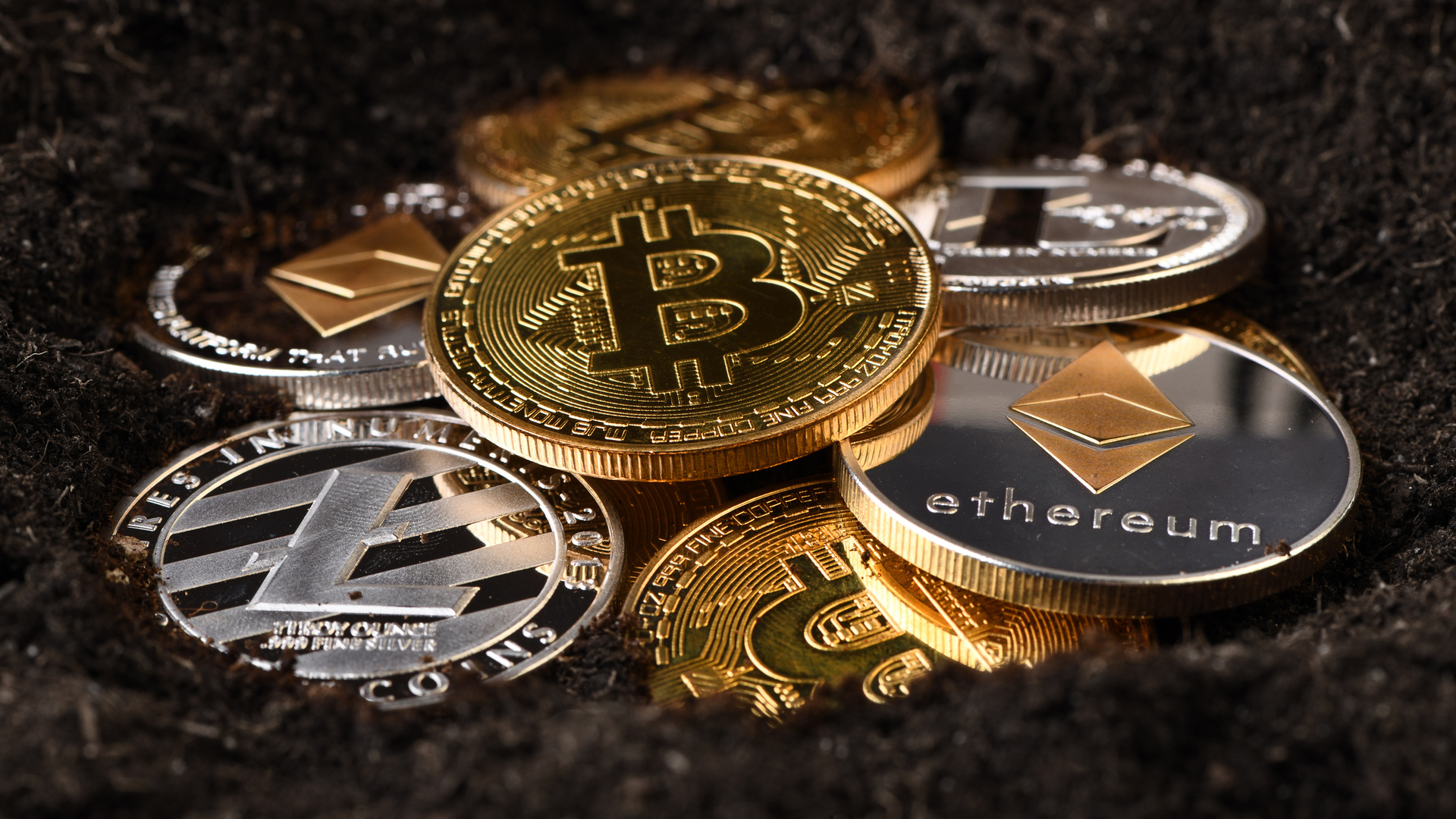
Cryptocurrency has significantly transformed how Americans perceive money, investing, and the future of finance. According to Bridger Pennington, host of the Investment Fund Secrets Show, this shift is driven by new regulations, increased institutional investments, and a government that is becoming more favorable towards digital assets.
Pennington stated, “I believe the peak interest in crypto has been increasing recently, as Trump is the most crypto-friendly president ever. We’ve seen the SEC repeal the SAB121 rules for crypto accounting, which now allows banks to hold crypto assets on their balance sheet. It seems like the next era of money will be based on crypto.”
From major Wall Street firms like BlackRock to government agencies, there is a growing race to secure digital assets as the foundation for future financial systems. With these significant changes, many Americans are wondering which cryptocurrencies could emerge as the next Bitcoin. Here are the top contenders, supported by recent news and expert opinions.
Earning passive income doesn't have to be complicated. You can start this week.
Ethereum: The Smart Contract Pioneer
Ethereum is often referred to as the silver to Bitcoin’s gold, but its technology might give it an edge to become the next Bitcoin. According to Nasdaq, Ethereum's price surged 45% in early summer, outpacing Bitcoin's 14% gain, thanks to its latest upgrade, Pectra, which improved speed and efficiency. Ethereum's platform also powers decentralized applications, NFTs, and DeFi, making it a backbone for innovation in the crypto space.
With the SEC expected to offer new guidance on staking, Ethereum could see even more institutional adoption and regulatory clarity this year. As more developers and investors flock to Ethereum, its potential to surpass Bitcoin in utility and value becomes increasingly likely.
Ripple (XRP): Fast, Scalable and Bank-Ready
Ripple, with its digital asset XRP, has emerged as a leading candidate for global adoption in cross-border payments. Utkarsh Ahuja, a crypto investor and founder of Moon Pursuit Capital, said, “I think Ripple could be the next Bitcoin, because it beats Bitcoin in transaction speed. XRP transactions settle in just three to five seconds, and cost only a fraction of a cent. In comparison, Bitcoin transactions can take 10 to 60 minutes, and traditional SWIFT transfers may take up to five business days.”
Ripple’s speed and low cost make it attractive for banks and financial institutions looking to move money efficiently worldwide. Over 300 institutions have already adopted Ripple’s technology, highlighting its growing influence in the financial sector. With its On-Demand Liquidity (ODL) service, Ripple could potentially replace SWIFT as the global leader in money transfer by enabling rapid cross-border payments without the need for pre-funded accounts.
Solana (SOL): Speed and Low Fees for the Next Generation
Solana has gained attention for its high-speed and low-cost transactions, making it a favorite among developers building decentralized apps. According to Forbes, Solana’s network can process thousands of transactions per second, with fees that are often less than a penny. This performance has attracted projects in areas like gaming, NFTs, and DeFi, helping Solana build a vibrant ecosystem.
Solana’s unique consensus mechanism, called Proof of History, enables fast validation and efficient scaling. While the network has faced some technical challenges, its rapid growth and active community suggest it could play a major role in the next wave of crypto innovation. Investors looking for the next Bitcoin often consider Solana because of its potential to handle mainstream adoption and real-world use cases.
Cardano (ADA): Focused on Security and Sustainability
Cardano stands out for its scientific approach to blockchain development, with a focus on security, sustainability, and peer-reviewed research. According to the Wall Street Journal, Cardano uses a unique proof-of-stake consensus mechanism that reduces energy consumption compared to proof-of-work systems like Bitcoin. The platform’s developers have partnered with universities and governments to explore real-world applications, especially in developing countries.
Cardano’s roadmap includes features for smart contracts, decentralized finance, and digital identity, which could drive future growth. Experts say Cardano’s careful approach and strong academic backing make it a serious contender for long-term success. As more Americans look for environmentally-friendly and secure crypto options, Cardano’s reputation continues to grow.
More From CryptoLiveDaily
This article originally appeared on CryptoLiveDaily: 4 Cryptocurrencies Investors Are Watching as Potential Bitcoin Alternatives
9 Safe Accounts Proven To Grow Your Money Up To 13x Faster
How Middle-Class Earners Are Quietly Becoming Millionaires -- and You Can, Too
10 Low-Effort Ways to Make Passive Income (You Can Start This Week)
The Best Checking, Savings and CD Accounts of 2026

Post a Comment for "4 Cryptocurrencies Investors Are Tracking as Bitcoin Alternatives"
Post a Comment