
US aircraft carrier returns home after historic deployment including Iran conflict and Maduro capture
The USS Gerald R. Ford: A Historic Deployment and Homecoming
The USS Gerald R. Ford, the largest and most advanced aircraft carrier in the U.S. Navy, recently returned to its home port in Virginia after a remarkable 11-month deployment at sea. This mission marked the longest operational deployment by an aircraft carrier since the end of the Vietnam War, showcasing the ship’s critical role in several high-profile military operations.
The deployment was filled with challenges and accomplishments, including participation in the capture of former Venezuelan President Nicolás Maduro, involvement in the conflict with Iran, a shipboard fire, and ongoing plumbing issues. Despite these obstacles, the crew of the USS Gerald R. Ford demonstrated resilience and professionalism throughout their time at sea.
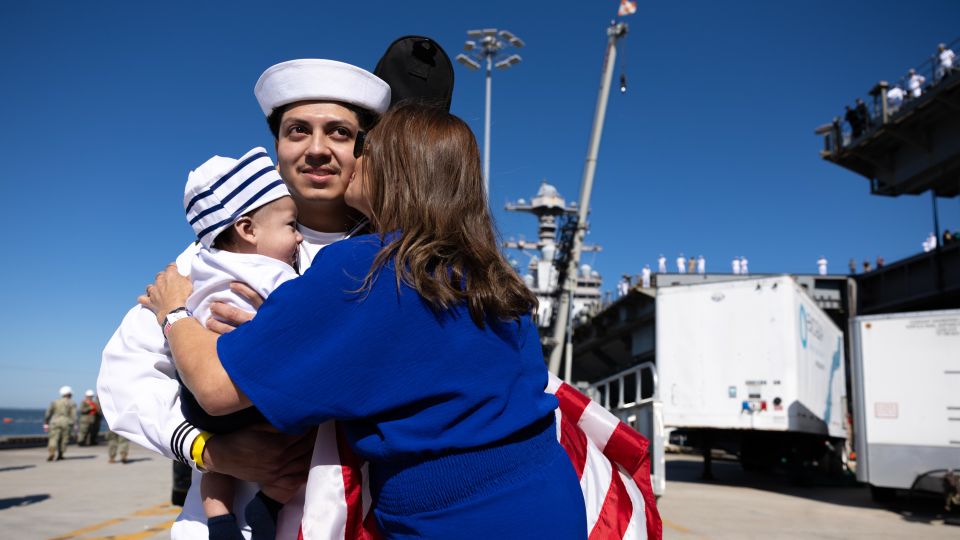
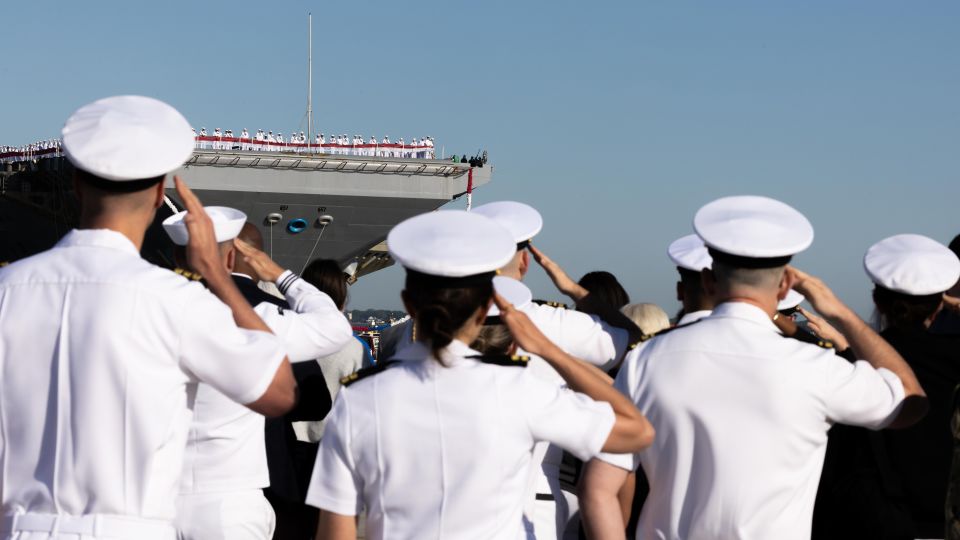
For the families of the sailors, the return was a long-awaited moment of relief and celebration. On Saturday, they gathered in Norfolk to welcome their loved ones back, cheering as the ship made its way to the dock. Sailors aboard waved to the crowd, which held handmade signs expressing their joy, such as “I missed you! Glad you’re back.”
Defense Secretary Pete Hegseth praised the efforts of the Ford Carrier Strike Group, stating, “What the Ford Carrier Strike Group did, and these destroyers did, was exceptional, phenomenal.” The return of the crew was not just a personal victory for their families but also a testament to the dedication and sacrifice of the sailors.
Challenges Faced During Deployment
Victoria Dobson, whose husband served on the USS Gerald R. Ford, shared her experience of the past year. She wore a white dress with American flags to welcome her husband home, expressing her excitement and relief. “The most difficult part was definitely the single parenting,” she said. “When he left, she was a baby, and now she’s a big girl.”
Adm. Daryl Caudle acknowledged the difficulties of the extended deployment, emphasizing that it should not become a precedent. Aircraft carriers are typically designed for up to seven months at sea, but the Ford was deployed for 11 months. While Caudle cited a “once-in-a-lifetime confluence of events” as a reason for the prolonged mission, he stressed the importance of adhering to the intended deployment timelines.
Amini Osias, a parent of a sailor who served on the Ford, expressed his relief at the return. “Now I can actually relax and breathe and go back to a normal sleeping pattern,” he said. He planned to spend quality time with his daughter, hearing about her experiences and being a father again.
Incidents and Resilience
The journey was not without its challenges. In March, a fire broke out in the ship’s laundry area, requiring the crew to spend approximately 30 hours putting it out, cleaning up, and preventing it from reigniting. Over 600 sailors lost access to their bunks during this time, but no one was seriously injured. The incident added to the already challenging conditions faced by the crew.
Caudle mentioned that the fire is still under investigation. However, despite the setbacks, the crew remained resilient. Dakota Klinedinst, a Petty Officer First Class on the Ford, described the extended deployment as “tough” but highlighted the strong teamwork among the sailors. “The crew did a great job,” he said. “I think we all held together, we all held each other up and even, like, when things like the fire happened, like, nobody gave up.”
The ship also faced repeated issues with its toilet system, which led to intermittent partial outages. These problems required a port visit for repairs, adding to the challenges of the deployment.
Technological Advancements and Strategic Importance
Despite these challenges, the USS Gerald R. Ford has proven to be a valuable asset in U.S. military operations. The ship’s electronic catapult system allows it to launch a wide range of aircraft, from small drones to large fighter jets, providing commanders with flexible firepower options. According to Brent Sadler, a 26-year veteran of the Navy, this capability sets the Ford apart from the other 10 U.S. aircraft carriers.
The ship played a crucial role in the operation to capture former Venezuelan President Nicolás Maduro and in the conflict with Iran. After departing Virginia in June, the Ford traveled across the Atlantic, initially heading to the Mediterranean and Norway before being redirected to the Caribbean for the Maduro operation. It then moved to the Middle East to support operations against Iran before beginning its journey home.
The return of the USS Gerald R. Ford marks the end of a historic deployment that tested the limits of the ship and its crew. As the nation reflects on the challenges and achievements of this mission, the resilience and dedication of the sailors remain a source of pride and inspiration.

Post a Comment for "US aircraft carrier returns home after historic deployment including Iran conflict and Maduro capture"
Post a Comment